
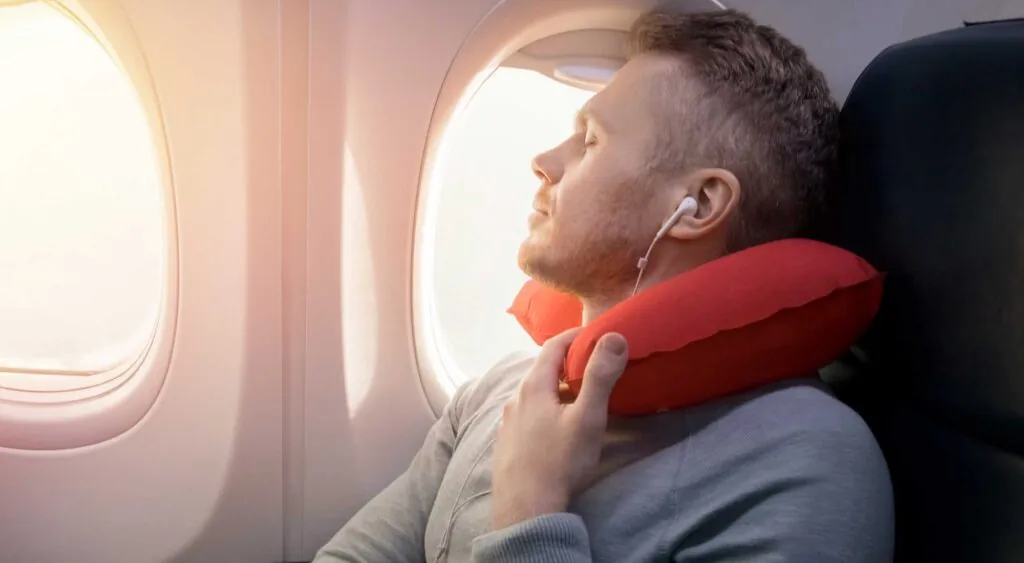

Most of us have been there — you finally reach your holiday destination, only to realize your neck feels like it never left the car or plane. Long hours of sitting, awkward sleeping positions, and cramped spaces can all turn your fun travel plans into painful plans.
With millions of people hitting the road (and the skies) this season, we wanted to know: which travel pillows actually help you arrive pain-free?
We asked one of our physical therapists to review four popular travel neck pillows and share what really works, and what doesn’t.
Why Neck Pain Happens When You Travel
Traveling, whether by car, plane, or train usually means staying in one position for a long time. When your head falls forward or to the side as you sleep, the muscles that support your neck are forced to work overtime to keep you balanced.
Your vestibular system — the part of your inner ear that helps you sense movement — also plays a role. When your head drops suddenly, that system sends a “falling” signal to your brain, which jolts you awake.
Poor posture, tight quarters, and lack of support all add up to one thing: stiffness and pain before you even arrive.
The 4 Travel Neck Pillows We Tested
1. The Basic U-Shaped Pillow
This classic design is what most people picture when they think “travel pillow.” It’s soft, lightweight, and gives your neck a bit of side-to-side support.
PT Insight: Having your head tilt at end-range positions tends to cause pain in most people, and this aims to mitigate that. The U-shaped pillow offers a decent amount of side-to-side support; however, it’s a preset size that doesn’t account for neck or shoulder width, which means you may have a hard time finding the most optimal position of comfort.
Best for: Short trips or quick naps.
Watch out for: Limited adjustability if you have broader shoulders or a longer neck.
2. The Structured Wrap Pillow
This one wraps around your neck like a supportive scarf, offering 360 degrees of control over tightness and head angle.
PT Insight: This type of wrap is similar to the U-shaped pillow; however, it offers 360 degrees of support and allows you to customize the level of tightness and head-tilt angle you want. This level of customization can enable you to choose positions that are the most comfortable, while allowing you to adjust if you begin to get uncomfortable in one position.
Best for: Long flights or road trips where you need steady support.
Watch out for: Over-tightening, it should support, not squeeze.
3. The Eye Mask System Pillow
This high-tech option combines a sleep mask with a head-anchoring system designed to stop that dreaded “head drop.”
PT Insight: You probably remember being in school and falling asleep while sitting upright at your desk, your head slowly nodding forward until you’re jolted awake. When you’re asleep and your head falls forward, your vestibular system kicks in to tell you that you’re falling, and this wakes you up. The interesting feature of this device is that not only does it provide a sleep mask, but it also anchors your head to the seat to prevent that head bob and keep your vestibular system calm.
Best for: Red-eye flights and overnight travel.
Watch out for: Your eyes are fully covered, so you can’t watch movies or use screens; this one’s really for sleepers only.
4. The Inflatable / Forward-Lean Pillow
This design looks unusual but is surprisingly effective for forward sleepers. You inflate it, hug it, and rest your head through the top opening — no neck twist required.
PT Insight: Unlike sleeping at a desk with your elbows up by your ears, this device has arm holes which allow you to keep your shoulders in a comfortable, less aggravating position. Additionally, there is a face-cutout which allows you to lie down while keeping your neck in a neutral position, opposed to rotating it to the side which most people find uncomfortable.
Best for: Passengers who like leaning forward to nap.
Watch out for: Bulk, it’s not the easiest to pack or inflate discreetly.
PT Takeaways: What Really Matters
- No travel pillow is perfect for everyone, but there are a few key things to look for:
- Neutral alignment is everything. Your head should stay in line with your spine, not tilted to the side.
- Adjustability helps. Pillows that let you control the angle or firmness make a big difference.
- Move often. Every couple of hours, stretch, roll your shoulders, or adjust your seat.
- Set up your space. Good seat support and posture can make even average pillows feel better.
How Physical Therapy Can Help
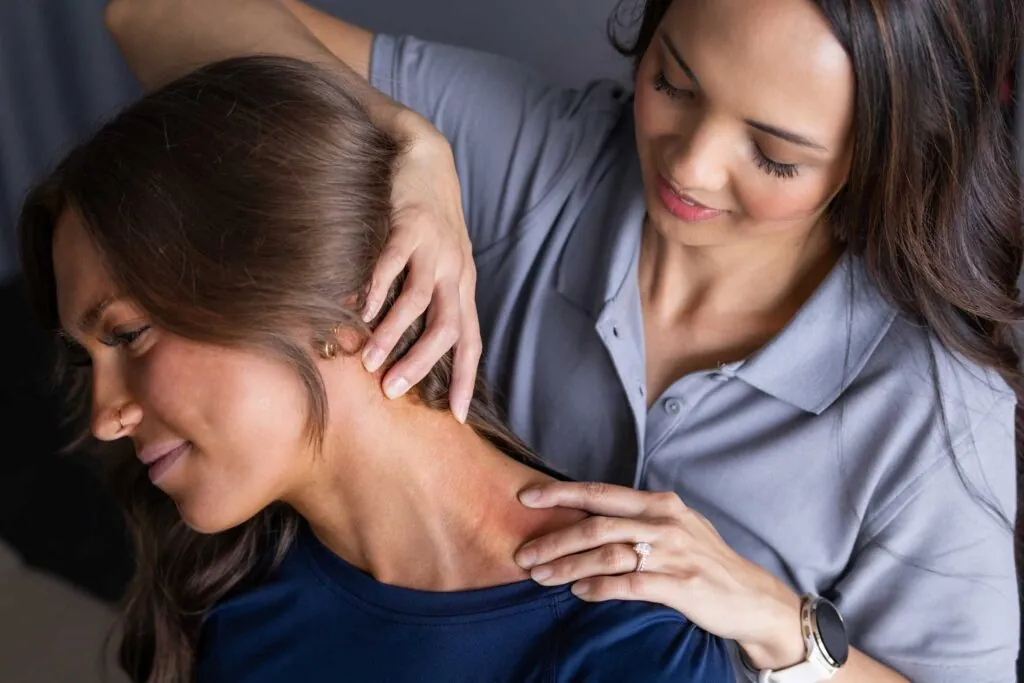
If neck pain is a regular part of your travels — or if you can’t seem to get comfortable no matter what pillow you use — a physical therapist can help. PTs can assess your posture, mobility, and muscle balance, and give you exercises that make sitting (and sleeping) easier during long trips.
Even a few guided sessions before a big trip can help you feel stronger, looser, and more comfortable once you’re on the road.
Final Thoughts
Traveling should be about the destination, not recovering from the ride there. With the right pillow and a little movement along the way, you can make it through your holiday travel without the aches and stiffness.
Physical Therapy Near You
If neck pain keeps following you from trip to trip, physical therapy can help. Our expert therapists can provide personalized strategies to improve posture, reduce tension, and prevent future pain.