
Fall sports bring an increase in practices, games, and overall sport activity. Some injuries will happen even when athletes and parents do everything right. Although complete prevention is not possible, athletes can control variables to reduce their risk of injury.
Research consistently points to several areas that can help youth athletes better tolerate the demands of sport. Strength, gradual increases in training, sleep, adequate fueling, and complete rehabilitation after injury all play a role.
Strength and neuromuscular training help youth athletes develop the physical qualities needed for sport, including strength, power, balance, coordination, and control.
A review focused specifically on youth athletes found that resistance training can reduce sports-related injuries, including both acute and overuse injuries, by up to 66%. The review also found improvements in strength, power, running speed, endurance, balance, flexibility, and overall motor performance.
Adequate training should include a mix of:
Athletes adapt to training when their bodies are given enough time to build capacity. Problems are more likely when training volume or intensity increases much faster than the athlete is prepared for.
Research examining training load has found a strong relationship between sudden increases in workload and injury risk. In one study, 40% of injuries were associated with a weekly training-load increase greater than 10% during the preceding week. Data in the review found that large short-term increases in training load were associated with substantially higher injury risk.
This becomes especially important:
Adequate progression does not mean avoiding hard training; athletes need challenging practices to become fitter and more resilient. The key is building toward those demands and staying fit in the offseason.
Sleep is one of the most important recovery tools available to youth athletes. It supports physical recovery, learning, concentration, reaction time, and overall health.
A study involving adolescent athletes found that athletes who averaged less than eight hours of sleep per night were about 1.7 times more likely to sustain an injury than athletes who averaged at least eight hours.
Adequate sleep for a youth athlete means making recovery part of the training plan. Parents may need to look at the athlete’s entire schedule, including school, homework, early practices, travel, and competition. A high training load combined with consistently short sleep can make recovery more difficult.
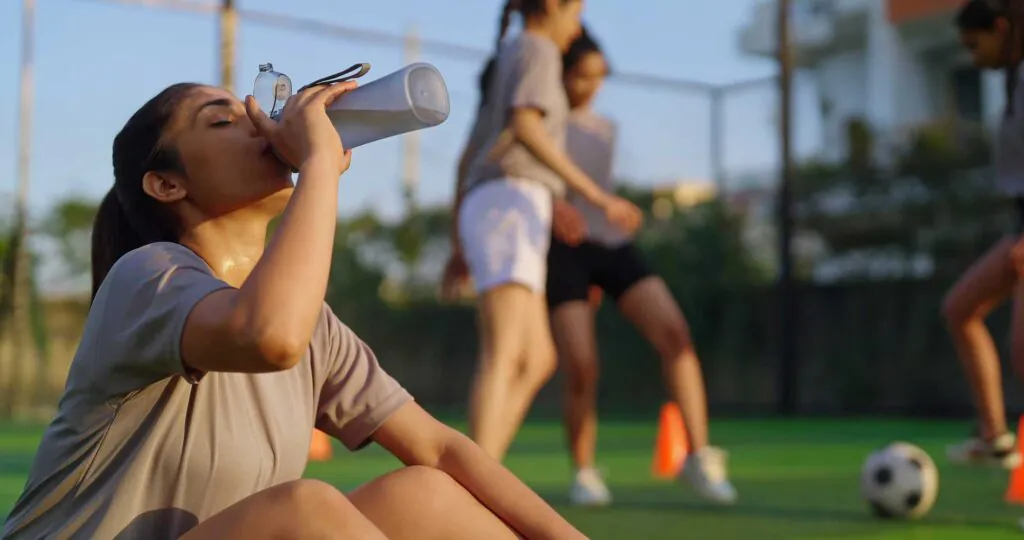
Youth athletes need enough energy to support training and normal growth and development. Consistently eating too little for the amount of activity being performed can lead to low energy availability and, in more significant cases, Relative Energy Deficiency in Sport, or RED-S.
A review focused on adolescents found that low energy availability can affect bone health, hormonal function, recovery, performance, and other body systems. It also found evidence linking low energy availability with higher rates of bone stress and soft-tissue injuries in youth athletes. The problem can affect both males and females.
Adequate fueling generally means:
Persistent fatigue, declining performance, difficulty recovering, recurrent injuries, or menstrual changes in female athletes may be signs that energy intake is not keeping pace with the athlete’s needs.
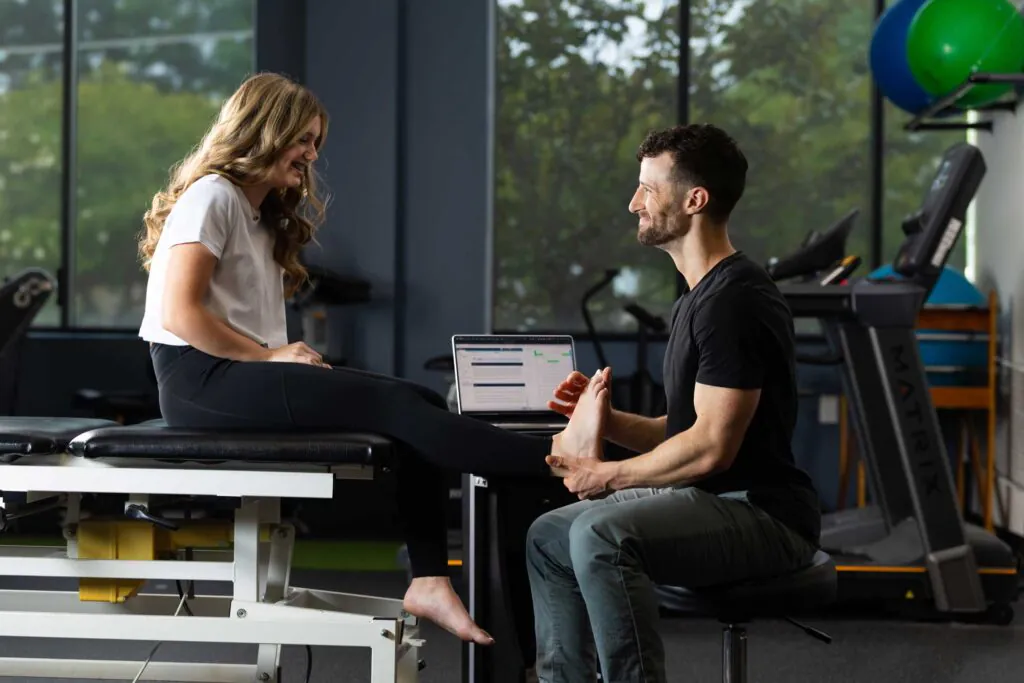
Pain improving is only one part of recovery. Athletes may still have deficits in strength, power, range of motion, balance, confidence, or sport-specific capacity after symptoms begin to settle.
A recent study followed 530 male athletes after ACL reconstruction and looked at how completing rehabilitation and meeting objective return-to-sport criteria affected their ability to return to pivoting sports. About 90% of athletes who completed rehabilitation and met the discharge criteria returned to sport, compared to about 61% of athletes who did not meet those criteria. Athletes who met the criteria had 5.7 times greater odds of returning to sport.
Those criteria included pain-free testing, greater than 90% strength symmetry, greater than 90% jump symmetry, completion of sport-specific training, and education on injury prevention and maintenance.
Adequate rehabilitation should rebuild the specific qualities the athlete needs for their sport. That can include strength, power, jumping, running, cutting, balance, confidence, and progressive exposure to full-speed practice. Return to sport should involve more than simply waiting for pain to disappear or reaching a date on the calendar.
Some soreness and fatigue are normal parts of training. An evaluation becomes more appropriate when symptoms begin interfering with normal movement, performance, or participation. For more information about what sports physical therapy involves and how it can help athletes safely return to activity, see our guide to sports physical therapy.
Consider having a youth athlete evaluated for:
More serious symptoms, such as loss of consciousness, signs of a possible fracture, or significant numbness or weakness, may require more urgent medical evaluation. Physical therapists are trained to recognize when referral to another medical provider is appropriate.
Physical therapists evaluate the factors that may be limiting an athlete’s ability to participate and perform. For a broader overview of athletic injuries, including common causes, symptoms, and approaches to evaluation and treatment, see our comprehensive guide to athletic injuries.
Depending on the injury and sport, an evaluation may look at strength, power, joint mobility, range of motion, balance, movement control, running, jumping, landing, change-of-direction ability, and sport-specific demands. After a concussion, physical therapists may also assess balance, vestibular function, and visual symptoms.
Treatment can then focus on rebuilding the qualities that are limited and gradually preparing the athlete for the demands of practice and competition.
Youth sports always come with some injury risk, but good preparation, recovery, fueling, and complete rehabilitation can help athletes stay healthier and perform at their best.
If your child is dealing with pain, weakness, limited motion, swelling, instability, or another issue that is affecting their ability to practice or compete, a physical therapist can help identify what is limiting them and build a plan to return safely and confidently to sport.
Find a physical therapy clinic near you to schedule an evaluation.