


We spend roughly 2,500 hours a year asleep. While we often focus on the quantity of sleep, physical therapists focus on the mechanics. Research published in The Journal of Physical Therapy Science suggests that poor sleep posture is a leading contributor to “waking spinal symptoms”—the stiffness and aches you feel the moment you move in the morning.
The goal of any sleep position is Neutral Spinal Alignment: keeping your ears, shoulders, and hips in a relatively straight line to minimize mechanical stress on your joints and ligaments.
Here is how to optimize your sleep based on current clinical evidence.
1. The Back Sleeper (Supine)

The Verdict: Often considered the “gold standard” for spinal neutrality.
The Evidence: Lying on your back allows for the most even distribution of body weight. Studies show this position minimizes “spinal deviation,” meaning your vertebrae are less likely to rotate or tilt unnaturally.
- The PT Pro-Tip: Place a small, firm pillow under your knees.
- Why it works: Clinical data shows that elevating the knees reduces “lumbar lordosis” (the arch in your lower back), which takes the pressure off your lumbar discs and facet joints.
- Best for: People with hip or lower back pain.
- Caveat: If you struggle with snoring or sleep apnea, this position can cause the tongue to collapse backward, narrowing the airway. In these cases, a side-lying position is medically preferred.
2. The Side Sleeper (Lateral)
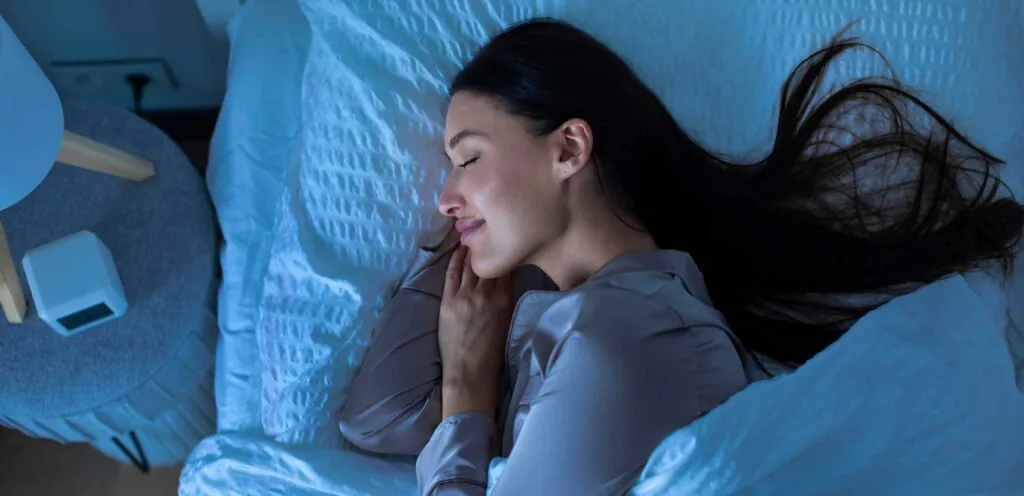
The Verdict: The most popular position and highly effective for respiratory and digestive health.
The Evidence: Research in Nature and Science of Sleep indicates that side sleeping (particularly on the left) can improve circulation and reduce acid reflux. However, without support, the “top” leg often falls forward, twisting the pelvis.
- The PT Pro-Tip: Use a firm pillow between your knees and a contoured pillow for your neck.
- Why it works: A pillow between the knees keeps the hips “stacked,” preventing the pelvis from rotating and pulling on the lower back. For the neck, a pillow height of 7–11cm is shown to best maintain the cervical curve.
- Best for: Pregnancy, obstructive sleep apnea, and those with certain types of back pain.
3. The Stomach Sleeper (Prone)

The Verdict: Generally discouraged by healthcare providers.
The Evidence: Multiple studies, including those from the Mayo Clinic, link stomach sleeping to increased neck pain. Because you cannot breathe through your pillow, you must rotate your neck to 90 degrees for hours—putting significant “compressive load” on your cervical joints.
- If you must sleep this way:
- Place a flat pillow under your pelvis to prevent your lower back from sagging into a painful arch.
- Use a very thin head pillow (or none at all) to reduce the angle of neck rotation.
The Role of Your Mattress and Pillow
Evidence-based research consistently points toward two hardware factors:
- Medium-Firm Mattresses: A landmark study in The Lancet found that medium-firm mattresses were significantly more effective at reducing back pain than very firm ones, as they provide a balance of support and pressure relief.
- Pillow Material: Recent trials suggest that latex and memory foam pillows maintain their shape better than feather pillows, leading to lower frequencies of waking neck pain.
When to Seek Professional Advice
“Sleeping through the pain” is not a long-term strategy. If you wake up with numbness, tingling in your hands, or sharp back pain that lasts more than 30 minutes, it’s time to consult a professional.
A Physical Therapist doesn’t just look at how you sleep; we look at how you move. We can identify the muscle imbalances or joint stiffness that make certain positions uncomfortable and give you a customized “sleep prescription.”
Stop waking up in pain. Find a Confluent Health clinic near you and let’s get your alignment back on track.