
You have probably heard someone say that being flexible is a sign of good health or even a predictor of living longer. Sometimes this idea shows up as a simple benchmark, like whether you can touch your toes. But does flexibility itself actually lead to a longer life?
The short answer is probably not. Flexibility alone is not a strong predictor of longevity. That does not mean flexibility is unimportant, but it does mean it is often misunderstood. To make sense of this, we need to separate what flexibility measures from what actually keeps people healthy and independent as they age.
Why People Associate Flexibility With Living Longer
Flexibility is easy to see and easy to test. You can watch someone bend over, squat down, or reach overhead and immediately form an opinion about their physical health. Compared to things like cardiovascular fitness or muscle strength, flexibility feels easier to define.
There are a few reasons this association sticks:
- Flexible people often move with less visible effort
- They appear less stiff and restricted
- They may complain less about aches and tightness

Because of this, flexibility gets treated like a global health score. In reality, it’s more of an associative benefit. Flexibility simply describes how much range of motion is available at a specific joint or group of joints. Touching your toes, for example, mostly reflects hamstring length, hip motion, and tolerance of spinal flexion. It does not directly measure strength, balance, endurance, reaction time, or cardiovascular health. Those distinctions matter when we start talking about longevity.
What the Research Actually Says About Flexibility and Longevity
Some studies have reported that people with lower flexibility have higher mortality rates over time. At face value, this can sound like flexibility itself is protective. However, these studies are observational and show association, not causation.
In other words, they tell us that lower flexibility and higher mortality tend to occur together, not that one causes the other. This opens the door to a much more likely explanation.
Flexibility Is Likely a Proxy for Being Active
People who are physically active tend to be more flexible than sedentary individuals. They move their joints through larger ranges more often, load tissues regularly, and spend less time in prolonged static positions. As a result, they usually maintain better mobility over time.
We already know that being active improves:
- Cardiovascular health
- Muscle mass and strength
- Metabolic health
- Balance and coordination
All of those factors are strongly linked to longevity, and flexibility comes along for the ride.

From that perspective, flexibility is not the driver. It is a marker that often reflects how someone lives. Reduced flexibility may signal lower activity levels, underlying health conditions, pain, or prior injury rather than acting as an independent risk factor for early death.
This is why flexibility by itself is a relatively weak predictor. It does not capture physical resilience or functional capacity, which are far more important as we age.
A More Meaningful Predictor: The Ability to Sit and Rise From the Floor
If flexibility alone doesn’t predict living longer, what does? One study looked at a simple but demanding task: the ability to sit down on the floor and stand back up again without assistance.
This movement requires several physical qualities working together:
- Lower body strength
- Balance and coordination
- Joint mobility at the hips, knees, and ankles
Researchers found that people who struggled with this task had significantly higher all-cause mortality over time. Importantly, this association held even after accounting for age and body composition.
What makes this test more meaningful than isolated flexibility measures is that it reflects real-world function. Getting up from the floor is something people need to be able to do after a fall, while playing with grandchildren, or during daily life at home. Difficulty with this task often signals declining physical reserve and loss of independence.
This does not mean practicing floor transfers will guarantee a longer life. It does mean that overall movement capacity, not isolated range of motion, tracks much more closely with long-term health outcomes.
What This Means for Flexibility as We Age
Flexibility still matters, just not in the way it is often marketed. The role of flexibility is to allow access to important positions. Daily life requires a basic level of mobility to:
- Squat or sit down and stand back up
- Step into a lunge position
- Reach overhead or behind the body
- Rotate the trunk to turn, reach, or look
When flexibility drops below what those tasks require, people compensate. They move less, rely on compensation strategies, or avoid certain activities altogether. Over time, that avoidance contributes to weakness, balance loss, and reduced activity levels.
The goal is not to chase extreme ranges of motion or flexibility milestones. The goal is to maintain enough mobility to move confidently, efficiently, and without unnecessary restriction. Strength and balance do most of the heavy lifting when it comes to aging well. Flexibility supports those qualities by keeping movement options available.
Final Thoughts
Flexibility by itself does not lead to greater longevity. While research shows that lower flexibility is associated with higher mortality, this relationship is likely explained by differences in activity levels and overall health rather than flexibility acting as a direct cause.
What matters more is whether you can move through everyday positions safely and independently. Tasks like standing up from the floor, squatting, lunging, reaching, and reacting to loss of balance tell us far more about long-term health than whether you can touch your toes.
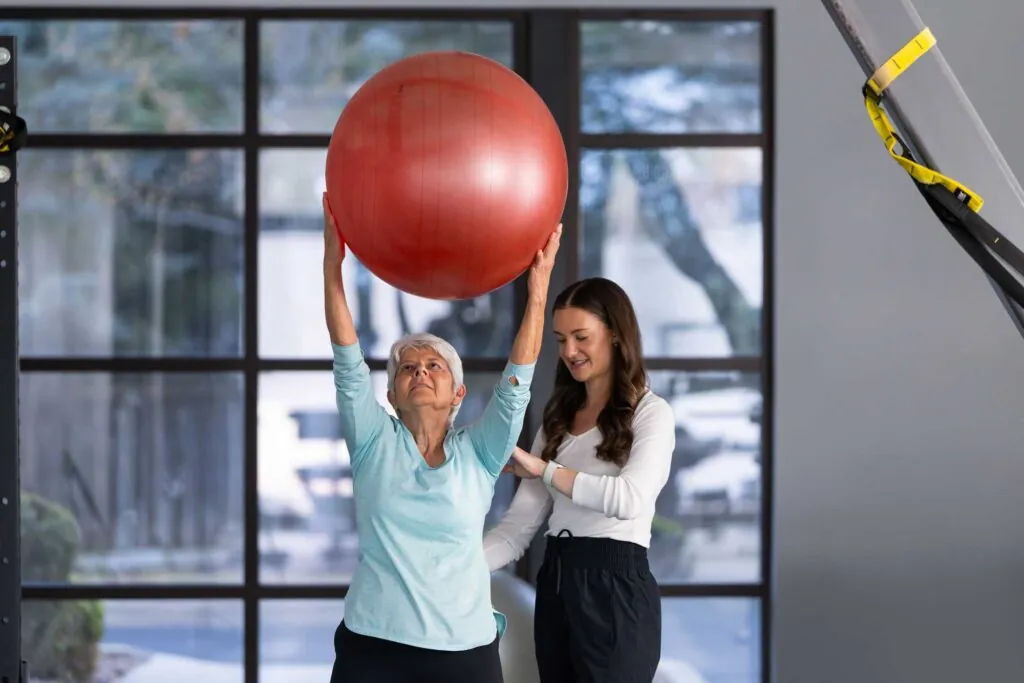
If stiffness, pain, or movement limitations are keeping you from staying active or confident in your movement, working with a physical therapist can help you build the mobility, strength, and balance that actually support long-term health and independence.
