
Chronic pain is not an acute episode that simply lasts longer.
It is a long-term health experience that affects how people move, work, sleep, function, and participate in daily life. Yet too often, the systems built to manage musculoskeletal pain still operate around short-term care windows, limited visits, fragmented referrals, and discharge-based thinking.
That mismatch matters.
In The Pain Perspective, 88.1% of patient respondents with chronic pain said their symptoms had lasted more than one year. This reinforces what clinicians already see in practice: chronic pain requires more than temporary intervention. It requires a pathway.
The challenge is not whether conservative care — such as physical therapy, movement-based treatment, patient education, and non-pharmacologic support — can help.
The challenge is whether healthcare systems are designed to support chronic pain treatment for long enough and consistently enough to make a meaningful difference.
Chronic Pain Requires a Different Operating Model
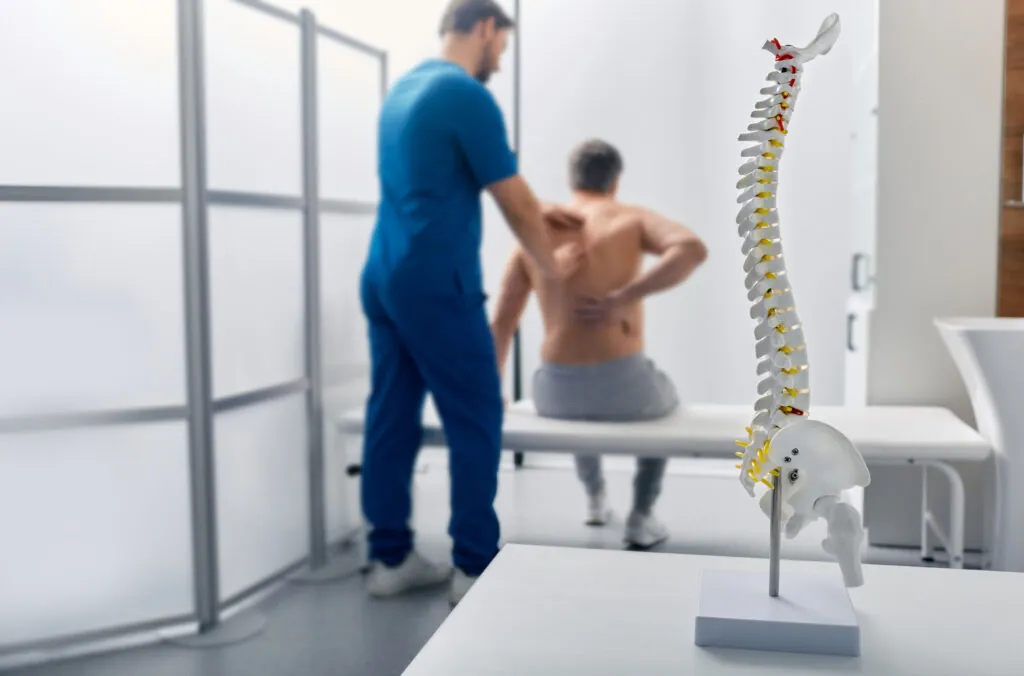
When chronic pain is treated as an isolated episode, patients may move through the system in disconnected steps.
They may receive a referral, complete a limited number of visits, experience a flare-up, return to a provider, try another intervention, and repeat the cycle without a long-term strategy.
This episodic model can contribute to:
- Delayed care
- Repeated flare-ups
- Fragmented referrals
- Interrupted treatment plans
- Reduced patient confidence
- Higher risk of escalation when conservative support is not sustained
For patients, this can feel like starting over again and again.
For clinicians, it can limit the ability to deliver the education, graded movement, trust-building, and continuity that chronic pain care often requires.
A chronic condition needs a chronic care mindset.
Access Is a Clinical Strategy
Access means more than whether care exists. It means whether patients can get the care they need, when they need it, in a way they can sustain.
For patients living with chronic pain, access can shape the entire care experience.
When care is delayed, difficult to schedule, hard to afford, or unavailable nearby, patients may lose confidence before treatment even begins. The Pain Perspective found that 47% of patients avoided care due to cost, while 40% reported insufficient musculoskeletal care options locally.
These barriers affect more than convenience.
They influence whether patients start care, continue care, stay engaged in treatment, and believe the system can support them over time.
Better access means simplifying the patient journey so conservative, movement-based care is easier to begin and sustain.
Effective access strategies may include:
- PT-first MSK pathways
- Direct access education where appropriate
- Streamlined scheduling
- Reduced referral friction
- Clear communication between providers
- Hybrid support when clinically appropriate
- Care navigation for patients with long-term pain
When access improves, the system has a better chance of delivering care before frustration, fear, and escalation take hold.
Continuity Builds Confidence
In chronic pain care, continuity is not a nice-to-have.
It is part of the intervention.
Patients with persistent pain often need repeated education, progressive movement, reassurance, plan adjustment, and support through flare-ups. These elements are difficult to deliver when care is fragmented or limited to short treatment windows.
Continuity allows clinicians to help patients understand:
- What pain does and does not mean
- How to move safely despite symptoms
- How to respond to flare-ups
- How to build capacity over time
- How to measure progress beyond pain scores
- How to stay engaged when recovery is not linear
This is especially important because chronic pain can affect optimism.
In The Pain Perspective, only 42% of patients said they feel optimistic about managing their pain long-term. That number is not just a reflection of pain severity. It is a reflection of experience, trust, and confidence in the system.
Patients do not need abstract hope.
They need systems that earn it.
Pathways Should Measure What Matters

If chronic pain care is measured only by visit completion, discharge, or short-term pain reduction, systems may overlook the outcomes that matter most to patients.
A better pathway should measure progress in ways that reflect real life, including:
- Function
- Confidence
- Activity tolerance
- Sleep
- Quality of life
- Flare-up management
- Engagement in recovery
- Patient-reported outcomes
- Long-term self-management
The Pain Perspective found that 73% of clinicians routinely use patient-reported outcomes. That is an important foundation, but the next step is ensuring those outcomes are used to support pathway design, care continuity, and system-level improvement.
Chronic pain care should not end when a short episode ends.
It should evolve as the patient’s needs evolve.
What Better Chronic Pain Pathways Can Look Like
A long-term MSK pain pathway should not mean endless treatment.
It should mean the right support at the right time, with clear expectations and meaningful transitions.
That may include:
- Early conservative care
- Patient education from the start
- Movement-based treatment
- Flare-up planning
- Mental and emotional health screening or referral pathways
- Regular reassessment
- Hybrid touchpoints between visits
- Communication with referring providers
- Outcomes tracked over time
The goal is not to create dependency.
The goal is to build capacity, confidence, and self-management.
Want to Go Deeper?
Download the full Pain Perspective report for patient, clinician, and physician insights on chronic pain care, including access barriers, optimism gaps, and opportunities to build more connected, conservative, whole-person MSK pathways.
The Future of Pain Care Requires Pathway Design
Chronic pain is not waiting for a single breakthrough.
It is waiting for better infrastructure.
Patients are asking for care that is conservative, continuous, and connected. Clinicians are ready to deliver it. Physicians recognize the value of physical therapy and multimodal care.
The opportunity now is to design systems that treat chronic pain as the long-term condition it is — and support patients long enough to help them move, function, and live with greater confidence.
