
When most people hear pelvic floor therapy, they immediately think of one word: Kegel. While Kegels are a common exercise for pelvic health, relying on them alone to strengthen your pelvic floor is like using paper napkins to level an uneven table.
Pelvic floor health is a sophisticated branch of movement science that affects both men and women, and goes far beyond “just squeezing.” Whether you are an athlete, grandparent, or someone navigating chronic pain, understanding the biomechanics of this region is essential for a productive and pain-free life.
The Anatomical Architecture of Support
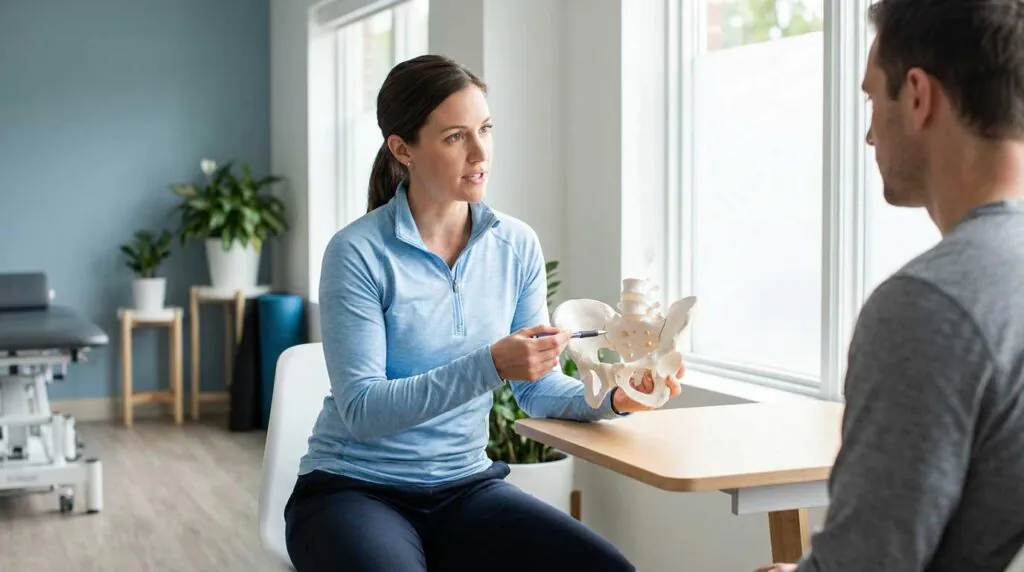
The pelvic floor is not a single muscle; it is a complex, multi-layered “hammock” of muscles and ligaments at the base of the pelvis. It serves as a foundational structural unit that coordinates with your diaphragm and deep core to manage pressure and movement.
From a clinical perspective, the pelvic floor performs three vital roles:
- Support: It maintains the position of the bladder, bowel, and reproductive organs.
- Stability: It is a key stabilizer for the spine and hips, acting as the “bottom” of your core cylinder.
- Continence Control: It allows for the controlled opening and closing of the urethra and rectum.
Why “Just Squeezing” Isn’t the Answer
A common misconception is that all pelvic issues stem from weakness. Many patients, both male and female, experience muscles that are too tight and overactive (hypertonic) which leads to tension. When the muscles are constantly “on” and unable to reach a state of full relaxation, the pelvic floor is unable to adequately perform the roles above. This can lead to coordination issues, pain, and incontinence.
If you perform Kegels on a hypertonic pelvic floor, you can inadvertently increase tension, which often leads to more pain or dysfunction. This is why physical therapy also focuses on neuromuscular re-education. Instead of only strengthening, a physical therapist works to train your brain to properly engage and relax these muscles in coordination with your breathing and daily movements.
Not Just Pelvic Pain
Because the pelvic floor is the anchor point for your midsection, its dysfunction frequently manifests as pain in areas you might not expect, such as:
- Lower Back Pain: When the pelvic floor doesn’t stabilize the pelvis, the lower back muscles must overwork to compensate.
- Hip Pain and Tension: The hip rotators and pelvic floor muscles are anatomical neighbors that share neural pathways. If the pelvic floor is weak or overactive, it can cause the hip to over compensate which leads to pain or reduction in movement.
- Athletic Performance Issues: Issues like leakage during high-impact activities (running, jumping, and lifting) are often signs of a “pressure management” coordination deficit rather than simple weakness.
- Breathing Issues, Neck Pain, and Headaches: The pelvic floor and diaphragm work in tandem so a hypertonic pelvic floor can lead to shallow chest breathing; this disruption can overwork other muscles in the head, leading to pain.
This is why pelvic floor health is crucial for all ages and genders.
Prioritizing Your Foundation
As we recognize Pelvic Health Month, remember that your pelvic floor is a critical pillar of your physical well-being. Your pelvic floor shouldn’t just be strong, but also responsive. By moving beyond Kegels and embracing a professional, whole-body approach to care, you can address the source of pain and move with greater confidence.
Don’t wait for symptoms to disrupt your life. Our specialists offer comprehensive screening to help you understand your unique biomechanics and create a plan tailored to your goals and lifestyle. Schedule your evaluation today and discover how a healthy pelvic floor can transform your life.
