
Herniated discs can cause significant discomfort, limit mobility, and interfere with daily activities, work, and exercise. Physical therapy (PT) plays a vital role in addressing these issues by targeting the underlying causes of pain, improving spinal mobility, and restoring strength and function. Through guided exercises, movement retraining, and education, PT empowers individuals to manage symptoms effectively and enhance overall quality of life.
This article provides a comprehensive overview of how PT supports treatment and recovery for herniated discs. It explores evidence-based techniques, targeted exercises, and individualized approaches designed to reduce pain, improve function, and prevent recurrence. Whether you are experiencing back or leg pain due to a herniated disc, seeking ways to manage your symptoms, or a healthcare professional looking to understand the role of PT in spinal care, this guide offers practical, clinically informed insights.
A herniated disc occurs when the inner gel-like material of a spinal disc (the nucleus pulposus) pushes through a weakened or torn outer layer (the annulus fibrosus). This can place pressure on nearby spinal nerves, leading to symptoms such as pain, numbness, tingling, or weakness in the back, arms, or legs depending on the location of the herniation.1 While disc bulges and herniations are often discussed together, a true herniation involves a more focal defect where the inner material extends outward and is more likely to irritate the surrounding nerves.1
Herniated discs are relatively common, with up to 2% of adults experiencing a disc herniation each year.1 They are more frequently seen in adults and tend to increase with age due to natural degeneration of spinal structures. Interestingly, not all herniated discs cause symptoms—many individuals may have imaging findings without any pain, highlighting the importance of a thorough clinical evaluation rather than relying on imaging alone.1
The impact on daily life can vary widely. For some, symptoms may be mild and manageable, while others may experience significant pain that affects sitting, standing, walking, or sleeping. In more symptomatic cases, nerve involvement can lead to radiating pain (such as sciatica), decreased strength, or altered sensation, all of which can interfere with work, exercise, and routine daily activities. PT plays a key role in helping individuals manage symptoms, restore movement, and return to normal function without the need for invasive interventions.1
Symptoms of a herniated disc can vary depending on the location and severity of the herniation. Common signs include localized back or neck pain, as well as numbness, tingling, or weakness in the arms or legs. Some individuals may experience radiating, sharp, or burning pain, often referred to as sciatica when the lower spine is involved, or radicular pain in the cervical spine.1
It is important to recognize red flag symptoms that require immediate medical attention. These include loss of bowel and bladder control, severe or rapidly worsening weakness, or numbness in the saddle area, which may indicate nerve compression requiring urgent evaluation.2 Early recognition and treatment of herniated disc symptoms can help prevent long term complications and support a faster, safer recovery.
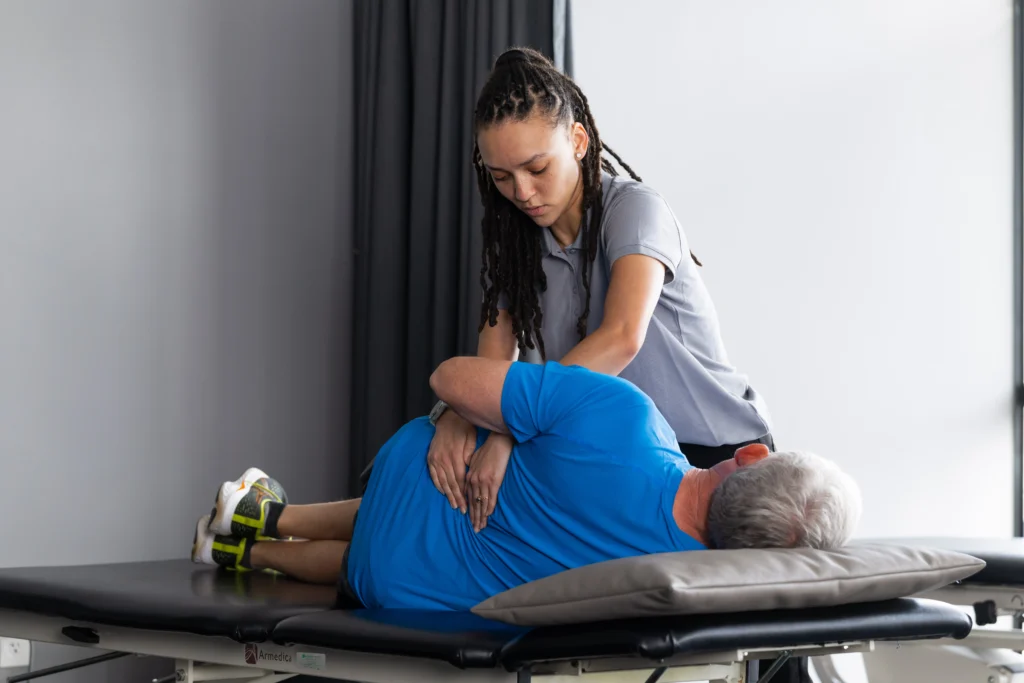
It is important to seek medical attention as soon as abnormal symptoms present. Physical therapists (PTs) are often the first point of contact, as they are trained in direct access evaluation and can diagnose many musculoskeletal and nerve-related issues without requiring an initial physician visit. If a patient’s symptoms plateau or if the PT identifies concerning signs, they are trained to refer the patient for further medical evaluation or imaging as appropriate.4
During an assessment, PTs perform a series of tests to identify physical deficits and nerve involvement. They evaluate for difficulty moving, muscle weakness or tightness, numbness, changes in reflexes, joint stiffness, poor posture, and gait abnormalities. Specific techniques may include myotome testing, reflex assessment, range of motion (ROM) evaluation, manual muscle testing (MMT), and neurodynamic testing, which together help pinpoint the affected spinal level and guide an individualized treatment plan.1 This hands-on evaluation ensures that therapy targets the specific dysfunctions contributing to pain and functional limitations.
Treatment for a herniated disc typically begins with conservative, non-surgical care, which is effective for the majority of individuals. The focus is on reducing pain, improving mobility, and restoring function while allowing the body to heal naturally. Surgical intervention is reserved for more severe or persistent cases that do not respond to appropriate conservative management.
Preventing a disc injury involves maintaining overall health and gradually building the body’s tolerance to physical demands. Key strategies include managing stress, prioritizing sleep, maintaining proper nutrition, and engaging in regular exercise, all of which support tissue health and recovery.6 Gradually increasing activity levels rather than making sudden changes helps prevent excessive strain on the spine.
Lifestyle factors also play an important role. Smoking cessation is critical, as smoking has been shown to impair disc health and healing. Individuals should also consider how their occupation impacts spinal loading. PTs can assess job-related tasks and provide recommendations to reduce injury risk. Maintaining strong and flexible muscles, particularly in the core and surrounding spinal structures, further supports spinal stability and long-term prevention.3

Living with herniated disc pain often requires a balanced approach that includes activity modification, symptom management, and long-term consistency. Rather than avoiding movement entirely, individuals are encouraged to stay active within tolerance, as appropriate movement helps maintain mobility and reduces stiffness. During flare-ups, temporarily reducing activity intensity, modifying movements, and using guided exercises can help manage symptoms while maintaining progress.2
Chronic pain can also impact mental and emotional well-being, contributing to stress, frustration, or fear of movement. Addressing these factors is an important part of recovery. Education, goal setting, and working with a PT can help build confidence, improve coping strategies, and support a more positive outlook. A comprehensive, individualized plan is key to managing symptoms effectively and maintaining long-term spinal health.6
PT is a highly effective, first-line treatment for herniated discs, focusing on reducing pain, restoring movement, and improving overall function without the need for invasive interventions. Clinics within the Confluent Health network utilize an individualized, evidence-based approach that emphasizes identifying the root cause of symptoms rather than just treating pain. Care plans are tailored to each patient’s presentation, goals, and tolerance to ensure safe and steady progress throughout recovery.
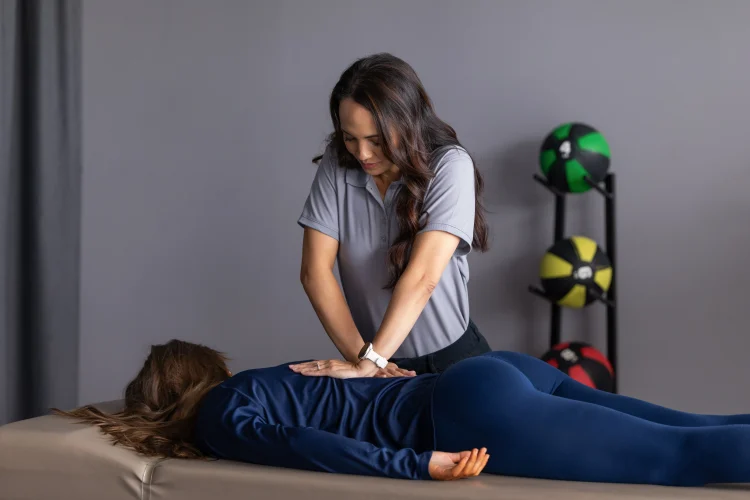
Treatment typically includes a combination of targeted exercises, movement retraining and symptom management techniques. These may involve directional preference exercises (such as extension-based movements), core stabilization training, mobility work, and progressive strengthening to improve spinal support. PTs may also incorporate manual therapy, nerve gliding (neurodynamic) techniques, and education on posture and activity to reduce stress on the spine and surrounding structures.7
The primary goals of PT are to decrease pain, centralize or reduce nerve-related symptoms, restore mobility, improve strength and stability, and return patients to their normal daily activities, work, or sport. Emphasis is placed on building long-term resilience through education and progressive loading strategies that help prevent recurrence.
With consistent participation, many individuals experience significant improvements in both pain and function, often avoiding the need for surgical intervention. Patients commonly report returning to daily activities, exercise, and work with greater confidence and reduced symptoms. This collaborative, patient-centered approach highlights the effectiveness of PT in achieving meaningful, long-term outcomes for individuals with herniated discs.
A herniated disc can cause localized back, neck and/or extremity pain, often accompanied by numbness, tingling, or weakness in the arms or legs depending on the nerves affected. Some people experience radiating, sharp, or burning pain–commonly called sciatica when in the lower back–while others may have only mild discomfort or stiffness. Symptoms often worsen with certain movements, like bending, lifting, or twisting.
For the majority of cases, herniated discs improve over time without surgery, as the body can naturally reduce inflammation and the disc material may shrink or stabilize. Conservative treatments, including PT, activity modification, and pain management, help support recovery and restore function. While some symptoms resolve within weeks to months, ongoing care may be needed to prevent recurrence or address residual pain.
When performed appropriately, physical therapy is designed to improve symptoms—not worsen them. A physical therapist uses graded, individualized exercises to reduce pain and safely restore movement while avoiding positions that aggravate the disc. Some mild soreness can occur as the body adapts, but therapy should not cause sharp or worsening nerve pain.