
BFR training is an innovative way to build strength without stressing your body. By safely limiting blood flow during light exercises, we help you grow muscle and recover faster from injuries like ligament tears or tendon issues. We’ll guide you every step of the way to ensure you get stronger without unnecessary pain.
Blood Flow Restriction (BFP) Training is transforming the way physical therapists (PTs) help patients rebuild strength, restore mobility, and return to the activities they value most. By using a specialized cuff to gently and safely restrict blood flow in the arms or legs, BFR allows patients to achieve the muscle-building benefits of high-intensity exercise while lifting only light to moderate loads.1
For individuals recovering from injury or surgery, managing chronic pain, or experiencing muscle weakness, this innovative method can accelerate rehabilitation without placing excessive stress on healing tissues or sensitive joints.2 Research has shown that BFR can stimulate strength gains comparable to traditional heavy resistance training even at significantly lower loads- making it an ideal option early in rehabilitation for those who cannot tolerate heavy lifting.3
At Confluent Health, our PTs are trained in the latest evidence-based BFR protocols, ensuring care that is both safe and precisely tailored to each patient’s needs. Whether your goal is to return to work, resume sport, or simply move through daily life with greater ease, BFR provides a clinically supported pathway to faster, more functional outcomes.
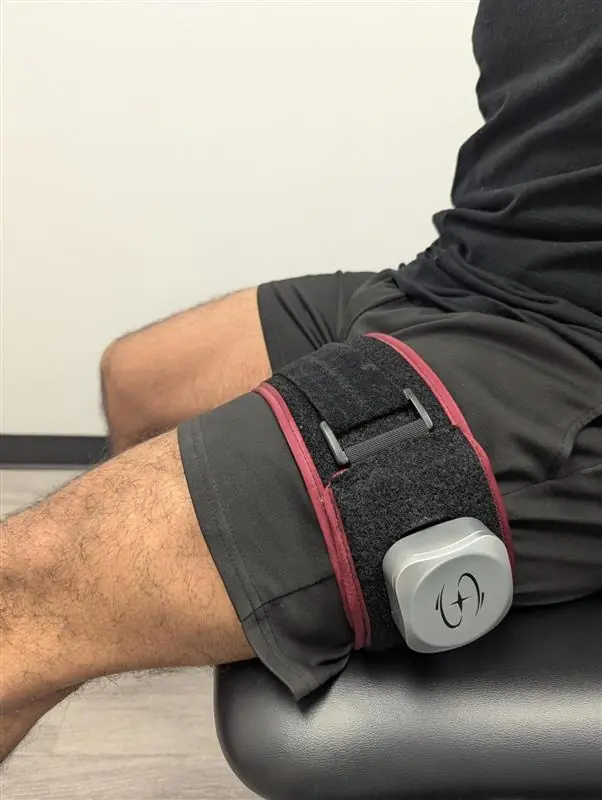
BFR training is a therapeutic exercise technique that uses a specialized cuff or band to partially restrict venous blood flow out of the limb while maintaining arterial inflow. This creates a controlled, low-oxygen environment that stimulates muscle adaptations similar to those achieved with traditional high-intensity strength training- yet with significantly lighter loads.1
During BFR, patients perform low-to moderate-intensity exercises while the cuff is inflated to a personalized pressure. The temporary restriction increases metabolic stress and muscle activation, prompting the body to release growth factors and recruit muscle fibers typically engaged only during heavy lifting.2 For patients recovering from injury, surgery, or long periods of inactivity, this means they can begin strengthening earlier and more safely than conventional training allows.
By enabling strength improvements with less joint stress, BFR can help patients return more quickly to the everyday activities that matter most to them. Individuals often see improvements in tasks such as lifting household items, climbing stairs, standing from a seated position, or performing work-related movements. Because BFR helps rebuild lost muscle and enhance endurance, patients may also experience a boost in overall mobility, confidence and independence.3 For many, BFR bridges the gap between early rehabilitation and a full return to normal daily function- making it a powerful tool in modern PT practice.
BFR Training uses specialized cuffs or bands placed around the upper portion of an arm or leg to partially restrict venous blood flow during exercise. While arterial blood continues to flow into the limb, the restricted outflow creates a temporary, low-oxygen environment in the working muscles.1
This controlled restriction increases metabolic stress, triggers early muscle fatigue, and activates fast-twitch muscle fibers- responses typically seen only with heavy resistance exercise. Because of these physiological changes, patients can achieve meaningful strength and muscle growth while lifting significantly lighter loads, often just 20-30% of their normal resistance.2
The key to BFR’s effectiveness lies in how the body interprets the restricted environment. As muscles work harder to pump blood past the cuff, several beneficial processes occur:
BFR training is particularly beneficial for individuals who need to build strength but cannot tolerate heavy resistance due to pain, injury, or surgical precautions. Because BFR promotes muscle growth using very light loads, it supports safe and effective rehabilitation for a wide range of patients.
Athletes and active individuals recovering from muscle strains, ligament injuries, or tendon issues often struggle to regain strength without overloading healing tissues. BFR allows them to stimulate muscle adaptation early in recovery, helping prevent atrophy and supporting a faster return to sport-specific demands.2
Patients with arthritis, chronic joint pain, or conditions that limit weight-bearing can benefit from BFR’s low-load approach. Research shows that BFR can improve strength and functional mobility without the mechanical stress associated with traditional resistance training.3
After orthopedic surgeries-such as ACL reconstruction, rotator cuff repair, meniscus repair, or joint replacement- patients often face restrictions on how much they can lift or how intensely they can exercise. BFR provides a clinically supported pathway for rebuilding strength early in the healing process, reducing postoperative muscle loss and supporting a more efficient recovery.1
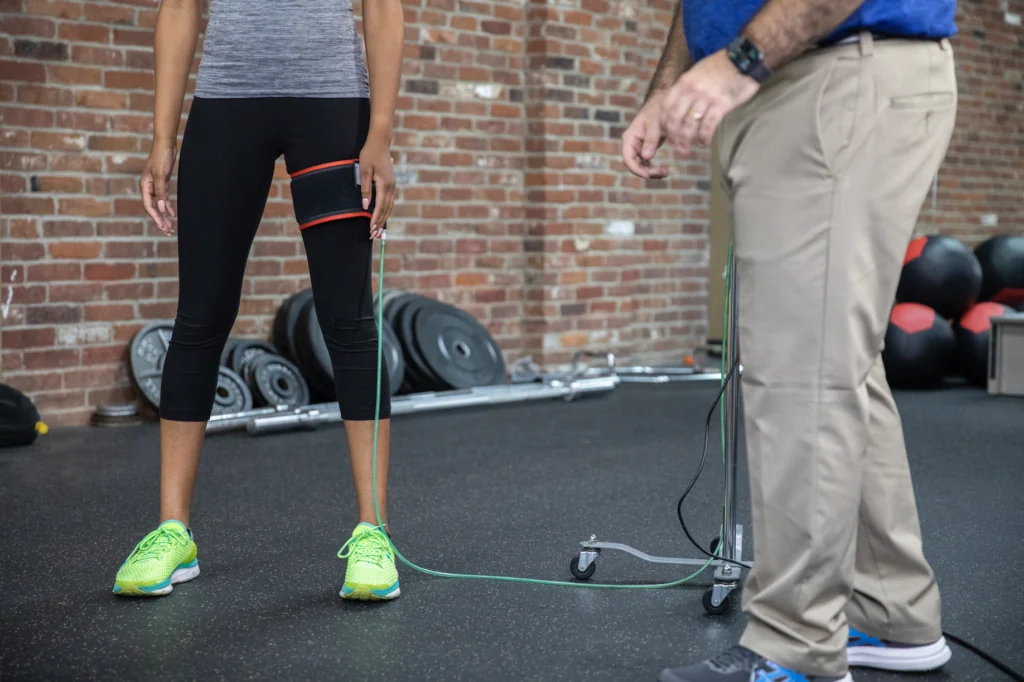
Determining whether BFR training is appropriate is an important part of your rehabilitation plan-and this assessment is something PTs are uniquely trained to perform. Because BFR requires careful screening, individualized pressure settings, and close monitoring during exercise. PTs play a critical role in ensuring the technique is applied safely and effectively.1
Licensed PTs are trained to evaluate strength, mobility, pain levels, and overall functional capacity to determine whether BFR may be beneficial. They assess factors such as:
This clinical decision-making ensures that BFR is used only when it is safe, appropriate, and likely to help you achieve your rehabilitation goals.
You do not need to see a doctor prior to beginning physical therapy (PT) for BFR training. PTs are highly trained clinicians who can independently evaluate your condition, identify whether BFR is safe and appropriate, and develop a personalized treatment plan tailored to your goals. Their expertise in assessing movement, strength, circulation, and pain makes them the ideal starting point for determining if BFR can support your recovery.
If your PT identifies anything during your evaluation that requires medical attention, they will collaborate with or refer you to the appropriate provider. But, in most cases, a PT can guide you confidently from your first visit and help you understand whether BFR fits into your broader rehabilitation plan.
Whether you’re recovering from an injury or surgery, dealing with joint pain, or simply struggling with strength and endurance in daily life, a PT is well equipped to determine if BFR will help you move forward safely and effectively.
BFR therapy offers several clinically supported benefits that make it a valuable tool in rehabilitation and performance recovery. By allowing patients to achieve strength and muscle gains with significantly lighter loads, BFR can accelerate progress while reducing stress on sensitive or healing tissues.1
One of the most well-established benefits of BFR is its ability to stimulate muscle hypertrophy and strength gains comparable to traditional high-load resistance training-even when using loads as low as 20-30% of a person’s maximum.2 Studies show that BFR increases fast-twitch muscle fiber recruitment and promotes metabolic stress, both key drivers of muscle growth.3
For individuals recovering from injury or surgery, BFR helps counteract muscle atrophy and promotes early strengthening without compromising healing structures. This makes it especially useful after orthopedic procedures such as ACL reconstruction, meniscus repair, or rotator cuff surgery. Research demonstrates that BFR can expedite recovery timelines and support quicker functional improvements.2
Traditional strengthening often requires heavy loads that can place stress on joints, tendons, and ligaments, BFR allows patients to achieve similar gains with much lighter loads, reducing stress and making exercise more comfortable for individuals with arthritis, chronic pain, or joint sensitivity.5
Beyond strength, BFR can contribute to cardiovascular health and muscular endurance. Low-load BFR training has been shown to improve aerobic capacity and enhance vascular function, making it a useful tool for individuals who may not tolerate high-intensity aerobic exercise.6 These adaptations support overall mobility and daily activity performance.
Whether your goal is recovering from injury, rebuilding muscle, reducing pain, or improving endurance, BFR provides a safe, research-supported pathway for achieving better physical function.

Selecting the right PT is an important step in ensuring safe, effective BFR therapy. Because BFR requires clinical expertise, careful monitoring, and individualized pressure settings, it’s essential to work with a PT who has specialized training and experience in using this technique as part of a border rehabilitation plan.
A qualified PT will take the time to understand your medical history, current condition, and personal goals. They will assess your movement, strength, and exercise tolerance to determine whether BFR is appropriate and how it should be integrated into your care. Therapists who regularly use BFR stay current with research, safety guidelines, and best practices, allowing them to adjust your program as you progress.
Just as important as clinical skills, is the relationship between you and your PT. Successful BFR rehabilitation depends on open communication and trust. A strong patient-therapist partnership ensures that your comfort level, concerns, and goals guide the process from start to finish. This collaborative approach not only enhances safety but also increases your confidence and engagement in your recovery.
Choosing a PT who listens, explains clearly, and tailors treatment to your needs helps ensure that BFR therapy becomes a safe, effective part of your journey back to strength and function.
Long-term health and well-being are best supported through consistency-creating an environment where children stay active, maintain flexibility and strength, and feel confident moving their bodies in a variety of ways. Pediatric PTs provide individualized home exercise programs, guidance on safe participation in sports, and strategies for improving body awareness so children can grow into resilient, capable movers. By incorporating these preventative habits early, families set the foundation for lifelong physical health and reduced risk of injury as children grow.
Light weights, starting around 20-30% of 1-rep max are utilized.
Yes, most everyone can utilize BFR, and your PT will screen you first for any contraindications.
BFR is typically prescribed a few times per week.
BFR training is typically safe to perform 2-3 times per week, depending on your goals and the guidance of your PT. Because it uses very light loads, it can be incorporated more frequently than traditional strength training, but your PT may adjust frequency based on how your body responds.
When performed under the supervision of a trained professional, BFR is considered low-risk, but potential concerns include temporary numbness, bruising, or discomfort. Serious complications- such as blood-clot-related issues- are rare, and a qualified PT will screen for contraindications to ensure it’s safe for you.