
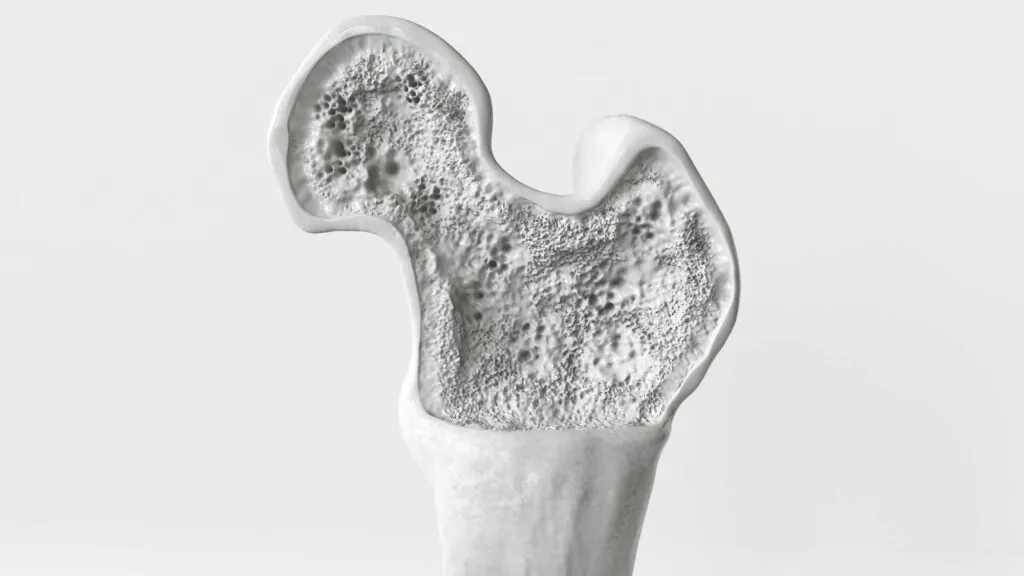
Osteopenia vs Osteoporosis
- Osteopenia refers to bone density that is lower than normal
- Osteoporosis is a more advanced loss of bone strength that significantly increases fracture risk
Bone mineral density, or BMD, is simply a measure of how strong and dense your bones are. Lower density means bones are more fragile and more likely to fracture, especially in areas like the hip, spine, and wrist.
How It’s Measured
The most common test is a DEXA scan, which gives you a T-score:
- 0 to -1 = normal
- -1 to -2.5 = osteopenia
- -2.5 and below = osteoporosis
Part of the problem is that most people are diagnosed only after this scan, or worse, after a fracture.
Bone Loss Is Silent & Why Women 40+ Need to Pay Attention Now
Bone loss does not cause pain early on. There are no warning signs. For many people, the first sign is a fracture from something that should not have caused one.
Hormonal changes, especially declining estrogen, accelerate bone loss. This creates a window where bone density can drop faster than most people expect. Waiting until symptoms appear is often waiting too long.
“Staying Active” Isn’t Enough
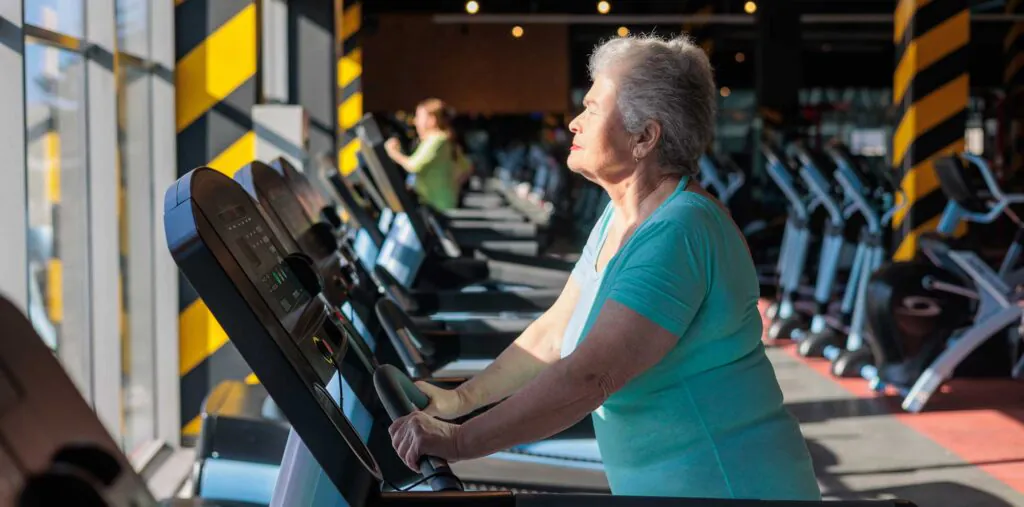
General recommendations like walking more, staying active, or doing light resistance exercise are beneficial for overall health, but they do not meaningfully improve bone density. Research consistently shows that low-load activity like walking has little to no effect on increasing BMD.
Even well-intentioned approaches often miss the mark:
- Bodyweight-only workouts
- Light dumbbells or resistance bands
- High-repetition, low-load “toning” classes
- Swimming, cycling, or walking
There has also been growing interest in weighted vest walking. While this increases cardiovascular demand and can improve load tolerance, it does not appear to meaningfully increase bone density on its own. In a clinical trial, prolonged daily use of a weighted vest did not prevent hip bone loss during weight loss.
What’s the Answer?
Improving bone density can involve several approaches including hormone therapy, medication, and nutrition. Those decisions require discussion with other healthcare providers such as your physician. Exercise, however, is one of the most powerful and controllable tools available, and your physical therapist is the expert in your corner.
How Bone Adapts to Exercise
There’s something called Wolff’s Law. This term refers to how bone adapts to the stresses placed on it. When the body experiences enough mechanical load, bone responds by becoming stronger. When that stress is too low, there is little to no adaptation.
This is the key concept most people miss: the stimulus has to be strong enough to matter.
Load Magnitude and Rate Matter
Two variables determine whether bone responds:
- Load magnitude – how much force is applied. This is what you get from heavier strength training.
- Load rate- how quickly that force is applied. This is what you get from impact activities like jumping or landing.
Both play a role. Slow, low-load exercise often fails because it does not reach the threshold needed to stimulate bone. This is why simply “doing more” of the same low-intensity activity does not improve bone density.
What the Research Shows on Building Bone Density
When you look at the research, a consistent pattern emerges. Bone responds to specific types of stress, not just general activity.
High-Intensity Resistance Training

Resistance training is effective when it is done at a sufficient intensity.
- Typically involves moderate to heavy loads
- Often described as roughly 80 to 85% or more of your maximum effort
- Requires progression over time, not staying at the same weight
The LIFTMOR trial is one of the most well-known studies in this area. It showed that postmenopausal women who performed high-intensity resistance training improved bone density compared to a control group. The control group who only performed low intensity exercise had either no changes or actually worse BMD scores at the end of the study.
This is an important distinction. It was not just resistance training. It was training at a level that actually challenged the system.
Impact and Plyometric Loading
Impact adds another critical stimulus. Activities like jumping, landing, or quick step-downs, create rapid loading forces that bone responds to more strongly. Studies that combine impact with loading show positive effects on bone density. This is why programs that include both strength and impact tend to produce the best results.
Plyometrics may seem intimidating, but there is a safe variation for everyone. It doesn’t matter if you’re in your 40s or 70s, you should be performing a scaled variation of a jumping or impact activity.
Where Physical Therapy Fits In
Physical therapy is often associated with recovering from injury, but it also plays a major role in prevention and performance.
A physical therapist can act as a loading specialist. They help determine your current capacity and how to safely apply the type of stress needed to improve bone density.
Effective programs are not random. They are built around:
- Strength training at appropriate intensity
- Impact or dynamic loading when appropriate
- Individual considerations such as pain, mobility, and balance
For someone with joint pain or balance limitations, jumping into high-impact exercise without guidance may not be realistic. This is where individualized planning matters.
A physical therapist helps you:
- Increase load safely and gradually
- Avoid under-loading, which limits results
- Avoid overloading, which increases injury risk
This balance is where most people struggle on their own.
Final Thoughts
Bone density does not improve from just staying active. It improves from applying the right type and amount of stress. Most people are doing the right kinds of exercise, just not at the intensity required to actually change their bone.
The good news is that it is never too late to start. Bone can still respond when given the right stimulus. The key is being intentional. Not just moving more, but training in a way that actually builds strength, resilience, and long-term health.
Need help from a physical therapist? Use the interactive map below to find a provider near you.
