
Children deserve to move and play without limits, and we’re here to help them do just that. From newborns to teenagers, we provide specialized care for a wide range of movement disorders, developmental delays, and injuries. We work closely with pediatricians to ensure early intervention, so that injuries in youth don’t lead to long-term issues. Whether it’s a sports injury, growing pains, or developmental concerns, our physical therapists develop age-appropriate programs to help your child thrive. Together, we’ll make sure your child can stay active, healthy, and ready for whatever adventures life brings.
Physical therapy (PT) plays a vital role in helping children move, grow, and thrive. This new resource is designed to serve as a comprehensive guide for parents, guardians, and healthcare professionals seeking to better understand how pediatric PT supports treatment and recovery. From easing pain to improving motor skills and enhancing overall quality of life, pediatric PT offers children and their families the tools they need to build strength, confidence, and independence.
Whether you’re a parent exploring treatment options, a caregiver looking for ways to help manage your child’s discomfort, or a referring provider wanting deeper insight into the benefits of PT, this guide aims to empower you with clear, practical information. Inside, you’ll find an overview of pediatric PT techniques, therapeutic exercises, and the value of seeking professional support tailored to each child’s unique needs.
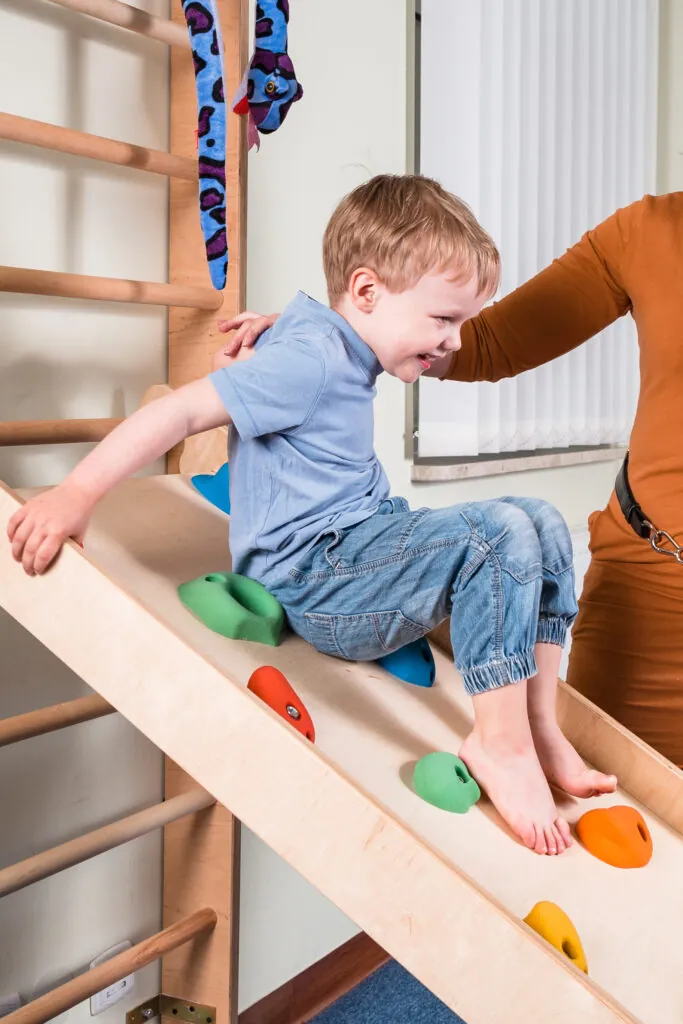
Pediatric PT is a specialized field focusing on helping infants, children, and adolescents improve movement, strength coordination, and functional independence. It supports children with developmental delays, neurological conditions, congenital disorders, orthopedic injuries, and chronic medical needs by using play-based exercises, therapeutic activities, and family centered education to enhance mobility and promote healthy development.1
A significant number of children benefit from pediatric PT, as approximately one in six children in the United States experience developmental delays or disabilities that may require early intervention.2 Research consistently shows that pediatric PT can lead to meaningful improvements in motor function- for example, children receiving more frequent therapy often experience greater gains in gross motor outcomes.3 Early intervention is especially impactful, with studies showing improved motor development in children who begin therapy earlier in life.4 However, access to services remains inconsistent, with data showing that only one-third of eligible children receive PT.4 The majority of pediatric PT interventions follow evidence-based practices, underscoring the effectiveness of commonly used therapeutic approaches.
Beyond statistics, pediatric PT plays a critical role in helping children reach important developmental milestones such as crawling, standing, and walking. It improves strength, balance, coordination, and movement quality,allowing children to participate more fully in daily activities and recreational play.5 For children with neurological conditions, therapy can promote motor improvements beyond what would occur with natural development alone.6 Pediatric PT is also valuable for pain management, recovery from injury, and preventing future movement issues. PTs work closely with families, teaching them strategies to carry therapeutic activities into the home environment to support long-term progress. When necessary, pediatric PTs may also recommend adaptive equipment-such as orthotics, walkers, or mobility aids- to support safe, effective movement. Consistent and high quality pediatric PT has been shown to contribute to long-term functional gains for children with neuromuscular and developmental disorders.4
Pediatric physical therapy supports infants, children, and adolescents with conditions that affect movement, strength, coordination, or motor development. Therapists commonly work with children who have neurological conditions such as cerebral palsy, traumatic brain injuries, muscular dystrophy, or peripheral neuropathies, helping them improve mobility, balance, and functional skills.7 PT also plays an important role in treating congenital and genetic conditions including Down syndrome, spina bifida, torticollis, and clubfoot, where early intervention can significantly improve posture, movement patterns, and coordination.2
Many children receive PT for orthopedic concerns, such as fractures, postoperative recovery, sports injuries, scoliosis, gait abnormalities, or joint pain. Treatment focuses on restoring strength, correcting movement patterns, and supporting a safe return to activity. Pediatric PT is also commonly used for developmental delays, particularly when a child is late to roll, sit, crawl, walk, or show age-appropriate balance and coordination.8
Children who may benefit from PT include those with muscle weakness, poor balance, frequent falls, abnormal muscle tone, delayed milestones, difficulty keeping up with peers, or movement patterns such as persistent toe walking. Whether a child is recovering from an injury, managing a long-term condition, or simply needs support learning age-appropriate motor skills, pediatric physical therapy helps build confidence, independence, and lifelong healthy movement habits.
Popular treatments in pediatric PT vary depending on the child’s condition but often include a combination of targeted therapeutic exercises, balance, and coordination training, gait training, stretching, and strengthening programs, and functional mobility activities. For children with developmental delays, PTs frequently use play-based exercises, gross motor activities, and milestone-specific drills to promote overall motor skill development.8 Those with neurological conditions often benefit from neurodevelopmental techniques, constraint-induced movement therapy, and functional task practice to improve movement quality and independence.7 Children recovering from orthopedic injuries typically engage in strength training, range of motion (ROM) exercise, and activity-specific rehabilitation to restore normal movement patterns and prevent future injury.
Children who may benefit from pediatric PT often show a range of symptoms related to neurological, congenital, orthopedic or developmental conditions. Signs of neurological issues may include abnormal muscle tone (either very stiff or very floppy), delayed motor milestones, poor coordination, persistent primitive reflex, difficulty with balance, or challenges using one side of the body more than the other. Congenital conditions such as torticollis, clubfoot,spina bifida, or Down syndrome may present with limited neck mobility, asymmetrical head shape, abnormal posture, joint instability, or delayed gross motor control.2 Children with orthopedic concerns may experience limping, joint or muscle pain, reduced ROM, frequent tripping, difficulty bearing weight, or noticeable gait abnormalities such as toe walking or in toeing.
Symptoms of developmental delays often include challenges in rolling, sitting, crawling, standing, walking, balance, coordination, or keeping up with peers during play. Some children may have trouble performing age-appropriate motor tasks, show decreased endurance, or fatigue more quickly than expected. Across all of these categories, persistent difficulty with movement, noticeable asymmetries, or delays in reaching early milestones are common indicators that pediatric PT can provide meaningful support.
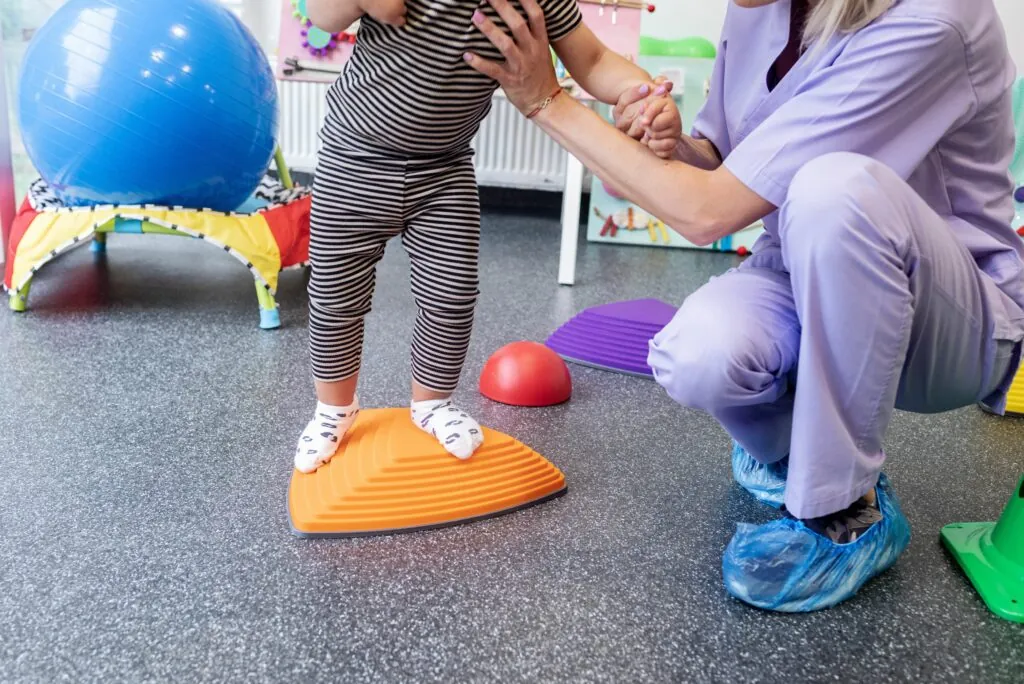
You don’t need a doctor’s referral to see a pediatric PT- PTs are highly trained clinicians who can independently evaluate your child’s movement, diagnose functional challenges, and determine whether PT is appropriate. Parents should consider scheduling an evaluation if their child is experiencing delayed milestones, persistent pain, difficulty keeping up with peers, frequent falls, abnormal movement patterns, or changes in posture or gait.
During an evaluation, pediatric PTs use a combination of observational assessments, standardized developmental tests, strength and flexibility measurements, gait analysis, and motor skills assessments to understand what may be causing a child’s symptoms. While PTs do not order imaging, they can identify when further medical testing such as X-rays, neurological exams, or additional orthopedic evaluations- may be necessary and will collaborate with your children’s physician if additional diagnostics are recommended.
PTs specialize in assessing how a child moves, what movements may be causing pain, and which systems (muscular, neurological, or orthopedic) may be contributing, Their goal is to determine the root cause of the issue and create a personalized treatment plan that supports healthy development, maximizes function, and helps your child move confidently and comfortably.
Pediatric PT plays a vital role in helping children overcome pain, developmental delays, injuries, and movement challenges so they can grow, play, and participate confidently in everyday life. By addressing concerns early, parents can support strong long-term outcomes, reduce future complications, and give their child the best opportunity to reach age-appropriate milestones. PTs use evidence-based, child-centered approaches to improve strength, coordination, posture, balance, and mobility, targeting the root causes of symptoms rather than just treating them at the surface.
To support recovery and development, pediatric PTs use a wide range of proven interventions including therapeutic exercises, play-based motor skill training, stretching and strengthening programs, balance and coordination activities, gait training, manual therapy, neuromuscular re-education, and modalities such as taping or electrical stimulation when appropriate. Each treatment plan is tailored to the child’s age, abilities, and goals, making therapy both effective and engaging.
The goals of pediatric PT sessions typically include improving functional movement, enhancing motor skill development, reducing pain, promoting independence, and helping children participate more fully in daily activities at home, school, and in their communities, If your child is showing signs of pain, delayed milestones, or difficult with movement, taking the step to schedule a pediatric PT evaluation can help you better understand their needs and begin a personalized plan that support their health and development.

Preventing injury in children starts with building strong movement habits early, and pediatric PTs play a key role in guiding parents towards safe, healthy practices, Encouraging regular physical activity, ensuring proper footwear, and helping children develop age-appropriate strength, balance, and coordination all significantly reduce the risk of future injuries. Parents can also support injury prevention by supervising new physical activities, teaching correct movement patterns during sports or play, and making sure children take breaks to avoid overuse.
Long-term health and well-being are best supported through consistency-creating an environment where children stay active, maintain flexibility and strength, and feel confident moving their bodies in a variety of ways. Pediatric PTs provide individualized home exercise programs, guidance on safe participation in sports, and strategies for improving body awareness so children can grow into resilient, capable movers. By incorporating these preventative habits early, families set the foundation for lifelong physical health and reduced risk of injury as children grow.
If your child has limited mobility, pain, unusual movement patterns, limited strength, or delays in motor function, then physical therapy may be needed.
Yes, our OTs and PTs can treat toe walking in children.
Your physical therapist can teach you interventions provided in PT that will allow you to provide treatment at home.
Mild bow-legs and knock-knees are often a normal part of development and usually improve as a child grows. However, if the alignment seems severe, is getting worse, causes pain, or lasts beyond the expected age ranges, a pediatric PT can evaluate your child to rule out underlying issues and guide treatment if needed.
Children develop at their own pace, and it’s common for siblings to reach milestones at different times. Still, if your younger child is significantly delayed in motor skills such as sitting. Crawling, or walking, a pediatric PT evaluation can help identify whether the delay is part of normal variation or if early intervention would be beneficial.