
Achilles tendonitis, also known as achilles tendonopathy, is a common overuse injury that can cause persistent heel pain, stiffness, and difficulty with walking, running, or other daily activities. Whether you’re an athlete, a weekend warrior, or simply someone who spends long hours on your feet, irritation of the Achilles tendon can significantly impact mobility and quality of life. Fortunately, physical therapy (PT) plays a central role in relieving pain, restoring strength, and promoting long-term recovery.
This guide provides a comprehensive overview of how PT supports the treatment and recovery of Achilles tendonitis. It explains how targeted exercises, manual therapy techniques, progressive loading programs, and movement retraining can reduce pain and improve function. The goal is to empower individuals with clear, practical information about evidence-based treatment options and the benefits of seeking professional care.
Achilles tendonitis refers to pain and dysfunction of the Achilles tendon–the thick band of tissue connecting the calf muscles to the heel bone. However, the condition is more accurately termed Achilles tendinopathy. While “tendonitis” suggests inflammation, research has shown that most persistent cases involve degenerative changes within the tendon (tendinosis), including collagen disorganization and tendon thickening rather than active inflammation.1 This distinction is important because treatment focuses on progressive tendon loading and tissue remodeling rather than solely addressing inflammation.
There are two primary types of Achilles tendonitis. Mid-portion Achilles tendinopathy, the more common form, presents with pain and tenderness located approximately 2-6 cm above the heel bone along the mid-tendon. Insertional Achilles tendonitis occurs at the point where the tendon attaches directly to the calcaneus (heel bone), with pain localized at the back of the heel itself.1 Identifying the specific type is important, as rehabilitation strategies may differ slightly between them.
Achilles tendonitis is one of the most common lower extremity tendon injuries in both athletic and non-athletic populations. It accounts for approximately 5-12% of running related injuries, and lifetime incidence among runners has been reported as high as 24%.2 Although frequently seen in runners and jumping athletes, it also affects those who suddenly increase activity levels or have contributing factors such as calf weakness or limited ankle mobility.
Achilles tendonitis can significantly interfere with daily activities. Individuals commonly experience morning stiffness, pain with initial steps after rest, discomfort during walking or stair climbing, and increased pain with running or prolonged standing.1 Without appropriate treatment, symptoms may persist or worsen, leading to reduced activity levels and diminished quality of life. Early intervention–particularly through structured PT–can help restore tendon capacity and prevent chronic dysfunction.
Achilles tendonitis most commonly develops due to repetitive or excessive strain placed on the tendon, particularly when activity levels increase faster than the tendon can adapt. This condition is widely understood as a ”load capacity” issue–the tendon is exposed to forces that exceed its current tolerance. It frequently occurs in individuals who return to walking, running, or sport after a period of inactivity; while the muscles may feel capable, the tendon may not yet be conditioned to handle the same volume or intensity of load.1
Age is also a contributing factor. As we get older, the Achilles tendon naturally becomes less flexible and more prone to microtears and degenerative changes, making it easier to injure.3 Other risk factors may include tight calf muscles, limited ankle mobility, improper footwear, sudden changes in training surfaces, or biomechanical factors that increase stress on the tendon.

Symptoms often begin gradually as a mild ache or stiffness in the back of the lower leg or just above the heel, particularly after running or sports related activity.3 As the condition progresses, individuals may experience more intense burning or aching pain, especially after prolonged running, sprinting, or stair climbing.
Over time, pain may begin to occur even at rest, particularly in more chronic cases. Symptoms are typically localized either to the mid-portion of the tendon (2-6 cm above the heel) or directly at the insertion in the heel bone. A hallmark feature is pain and stiffness when transitioning from rest to actvity–such as the first steps in the morning or after sitting for a while–which often improves once the tendon “warms up” and blood flow increases.1
Achilles tendonitis is typically straightforward to diagnose in a clinical setting. Individuals should consider seeing a PT if they experience persistent Achilles pain lasting more than a few days, worsening symptoms with activity, or difficulty returning to normal exercise. A PT can evaluate the condition and refer to a physician if signs suggest a partial tear, rupture, or other complicating factors.
Diagnosis is primarily clinical and includes palpation of the tendon for tenderness or thickening, along with functional testing such as single-leg calf raises, hopping, or resisted plantarflexion to reproduce symptoms In most cases, imaging is not necessary. However, ultrasound or MRI may be used if a tear is suspected, symptoms are severe, or there has been acute trauma.4
During a PT evaluation, therapists assess ankle mobility, calf strength, tendon load tolerance, gait mechanics, and movement patterns to determine contributing factors. This comprehensive assessment helps guide a progressive loading program designed to restore tendon capacity, reduce pain, and safely return the individual to activity.
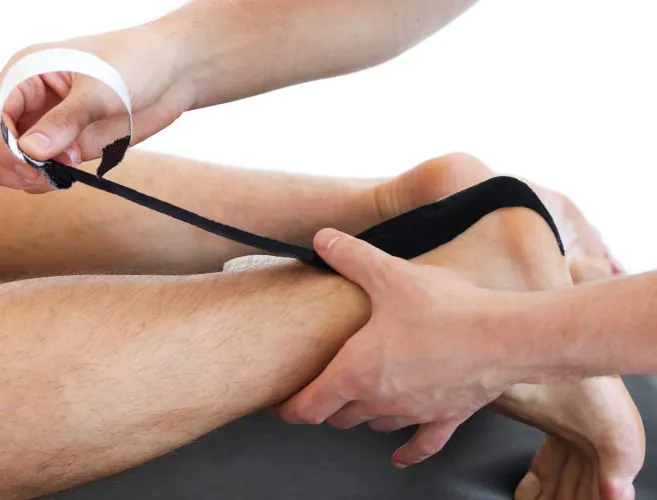
Managing Achilles tendonitis often requires patience and a long-term perspective. Flare-ups can occur, particularly if activity increases too quickly, but they can usually be managed without having to start the rehabilitation process over from the beginning. When symptoms increase, it is helpful to temporarily reduce overall activity volume rather than stopping completely (unless pain is severe), modify exercises to lower-impact options, and incorporate isometric calf exercise for short-term pain relief. Once symptoms begin to settle, gradual progressive loading can resume to continue building tendon capacity safely.
Most importantly, treatment should be individualized. Tendons adapt differently depending on age, activity level, training history, and overall health. A structured, progressive plan guided by a physical therapist helps ensure appropriate load progression, reduces the risk of reinjury, and supports long-term tendon resilience.
If you are experiencing persistent Achilles pain, seeking professional guidance early can help you remain active, maintain confidence in movement, and promote long-term health and well-being.
PT is considered the most effective first-line treatment for Achilles tendonitis. Rather than focusing solely on pain reduction, PT targets the root cause of the condition–reduced tendonload capacity. Through progressive strengthening, movement retaining, and education, PT helps the tendon adapt to stress safely and efficiently. Evidence consistently supports structured loading programs as the cornerstone of recovery. 2
Treatment typically centers around progressive loading exercise performed multiple times per week. These may include heavy slow resistance training, eccentric calf strengthening, and functional strengthening tailored to walking, running, or sport-specific demands, Isometric exercises are often used early in rehabilitation to help reduce pain, while manual therapy may address ankle or calf mobility restrictions. Education plays a critical role-patients learn how to appropriately manage training volume, understand normal versus concerning pain levels, and prevent future flare-ups.
The primary goals of PT sessions are to decrease pain, improve tendon capacity, restore strength and mobility, and return individuals to their desired activities with confidence. With consistent participation and appropriate progression, most individuals experience meaningful improvements in pain and function without the need for surgical intervention. Many patients report returning to walking, running, or recreational sports stronger and more resilient than before, highlighting the long-term benefits of a structured rehabilitation program.

Achilles tendonitis is most effectively treated by addressing its root cause–reduced tendon load capacity–rather than focusing on inflammation alone. PT plays a central role in recovery by guiding progressive strengthening, improving mobility, correcting movement mechanics, and educating patients on proper load management. With a structured, individualized plan, most people can significantly reduce pain, restore function, and return to their desired activities without the need for surgical intervention.
If you are dealing with ongoing Achilles pain, taking proactive steps now can prevent the condition from becoming more persistent or limiting. Seeking guidance from a qualified PT can provide clarity, direction, and a clear path forward. Early, evidence-based care empowers you to move confidently and build long term tendon health.
You should avoid pushing through worsening pain, especially activities that involve sudden increases in running, sprinting or jumping volume. Complete rest for long periods is also not recommended, as tendons need gradual loading to heal and regain strength. Instead of ignoring pain or stopping all activity, focus on modifying load appropriately.
Short-term relief often comes from temporarily reducing activity volume, using isometric calf exercise to calm pain, and avoiding high-impact movements during flare-ups. Long term relief is best achieved through a structured strengthening program that progressively builds beyond capacity. Working with a physical therapist can help ensure exercises are performed at the right intensity and progressed safely.