
Kinesio taping has become an increasingly valuable tool in physical therapy, offering a supportive, non-invasive way to manage pain and assist movement. This guide provides a clear and comprehensive overview of how kinesio taping can support muscles and joints, ultimately helping patients move more comfortably and confidently. Whether you are exploring kinesio taping for the first time, looking to understand how physical therapy uses this technique to manage pain, or a referring healthcare professional seeking insight into its clinical benefits, this resource is designed to empower you with the knowledge needed to make informed decisions about care and recovery.
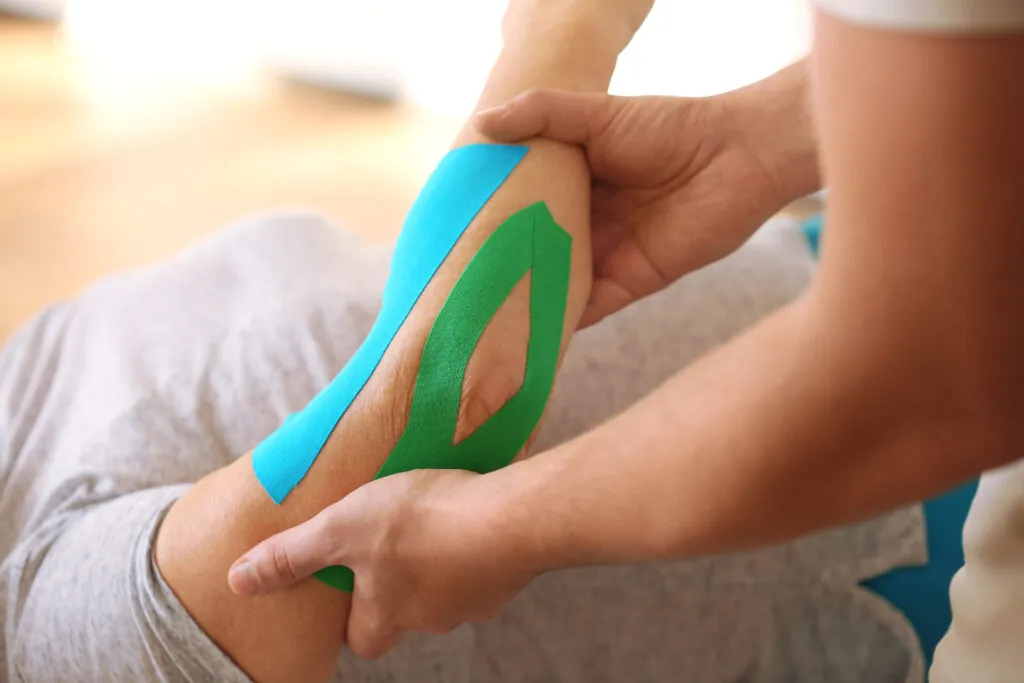
Kinesio taping is a therapeutic technique used in physical therapy (PT) that involves applying a thin, elastic, cotton-based tape to the skin to support muscles, joints, and soft tissues without restricting movement. Unlike traditional rigid athletic tape, kinesio tape is designed to stretch and recoil similarly to human skin, allowing patients to maintain functional mobility while receiving therapeutic support.1
In clinical practice, kinesio taping is considered an adjunctive intervention, meaning it is used to complement- not replace- skilled PT treatments. Physical therapists (PTs) may incorporate kinesio trapping to assist with pain modulation, enhance proprioceptive feedback during movement. Due to variable evidence and patient response, it is applied selectively based on individual assessment and clinical judgement.2,3
When used appropriately, kinesio taping may help patients move with greater comfort and confidence during daily activities. By potentially reducing pain, supporting injured or overused tissues, kinesio taping can assist patients in participating more fully in rehabilitation exercises and everyday tasks. While outcomes vary, some individuals report improved tolerance to activity and enhanced functional performance when kinesio taping is integrated into a comprehensive plan of care.4

Kinesio tape is used in clinical and athletic settings to support muscles and joints without restricting the body’s natural range of motion (ROM). It’s believed to work by lifting the skin, which may reduce pressure on pain receptors. Clinicians use it with the intention of enhancing proprioception (body awareness) and aiding movement patterns during rehabilitation or activity.5 Some of its benefits include:
Proprioceptive feedback: The tactile input from the tape can heighten awareness of body position and movement, which practitioners sometimes use to assist with movement control and posture.5
Kinesio taping is often used as an adjunct in PT and sports medicine when certain symptoms or functional needs are present. While research varies in strength, clinicians and patients report benefits in the short term for sensory and mechanical cues that can help with movement and pain management.5
Kinesio tape may alter sensory input from the skin and underlying tissues, which can change how pain signals are processed and perceived. Many clinicians use it to help reduce discomfort during movement or activity especially when paired with exercise and manual therapy.5
By stimulating skin receptors, the tape may increase sensory feedback to the nervous system, helping the body become more aware of joint position and movement- a benefit in balance training or movement re-education after injury.7
Unlike rigid tape or braces, kinesio tape provides dynamic support-giving feedback and gentle guidance while still allowing a full ROM. This makes it useful for aiding movement without rigid immobilization.7
By enhancing sensory feedback and proprioceptive awareness, kinesio taping can be integrated into rehabilitation programs to assist with retraining movement patterns, such as correcting gait or activation of specific muscles.7
Applied strategically, tape can act as a tactile reminder to maintain better posture during daily activities or exercise- for example, encouraging shoulder alignment or spinal awareness.7
Despite its multiple benefits, it is important to note that kinesio taping is not a standalone cure and is most effective when used alongside therapeutic exercise, manual therapy, and individualized clinical assessment. Effects tend to be short term, and tape should be applied correctly to avoid irritation or misuse.
Deciding whether kinesio taping is appropriate should ideally be part of a comprehensive evaluation by a qualified PT. PTs are trained in musculoskeletal assessment, movement analysis, and individualized treatment planning-including when and how to use therapeutic taping-without needing a prior doctor’s referral in many cases. PTs are highly qualified to evaluate and treat movement-related pain and dysfunction and can determine if kinesio taping is a useful adjunct to your care.
PTs evaluate the whole person, not just a single symptom, to determine if kinesio taping is likely to help your goals. This evaluation includes clinical reasoning about tissue irritability, movement dysfunction, and functional goals- things that taping alone doesn’t address.
You do not need to see a medical doctor prior to seeing a PT for mechanical pain. Stiffness, or functional limitations- especially if your concern involves soft tissues, joints, or movement-related pain. Due to direct access, you can see a PT without a doctor referral, so you can schedule an evaluation directly with a PT who can assess your condition and guide care, including kinesio taping if deemed appropriate.
Physical therapists are trained to recognize when symptoms require care beyond physical therapy and will refer you to the appropriate medical provider when necessary.
PTs use a comprehensive, movement-based evaluation to identify the source of symptoms and determine whether kinesio taping may be beneficial. This assessment typically includes orthopedic and functional movement tests to evaluate joint mobility, muscle strength, and compensatory movement patterns. PTs also measure ROM to identify limitations or asymmetries and perform manual muscle testing to assess muscle activation and functional strength. Gait and posture analysis allow therapists to observe how a person moves during walking and daily activities, helping to uncover underlying movement dysfunctions. In addition, a detailed patient history and symptom mapping provide insight into symptom patterns, triggers, and how the condition impacts daily function. Together, these assessment tools help the PT decide whether kinesio taping could support rehabilitation goals and how it should be integrated into a broader treatment plan.
During the evaluation process, PTs assess whether kinesio taping is likely to add value to an individual’s treatment plan. In some cases, a therapist may apply tape as a short clinical test to observe immediate changes in pain levels, movement quality, or functional performance. PTs also evaluate pain presentation and movement patterns to determine whether the sensory input provided by tape may assist with pain modulation or proprioceptive feedback. Importantly, kinesio taping is rarely used in isolation; instead, PTs integrate it alongside therapeutic exercise, manual therapy, and movement re-education strategies tailored to the individual’s condition and goals. Rather than applying a one-size-fits-all approach, experienced PTs rely on clinical reasoning, patient response, and outcomes over time to determine if kinesio taping is appropriate and effective.
When used appropriately within a comprehensive PT program, kinesio taping can support meaningful improvements in pain, movement, and confidence during daily activities and exercise. PTs use kinesio taping not as a standalone solution, but as a complementary tool alongside therapeutic exercise, manual therapy, and movement re-education. This integrated approach helps patients move more comfortably while actively addressing the underlying causes of their symptoms.
Common benefits patients may experience include reduced pain during movement, improved awareness of posture or joint position, and enhanced confidence when returning to activity. Because kinesio tape allows full ROM, it supports functional movement rather than restricting it, making it especially useful during rehabilitation and activity progression. Many patients also report feeling more supported and secure during exercise or daily tasks, which can positively influence adherence to their therapy program and overall outcomes.
The true benefit of kinesio taping lies in how it is prescribed and applied by a skilled PT. PTs tailor taping techniques to each individual’s condition, goals, and movement patterns, adjusting or discontinuing use based on progress. Rather than masking symptoms, PT focuses on restoring strength, mobility, and movement efficiency- with kinesio taping serving as a temporary support to enhance these outcomes.
In short, kinesio taping can help you move with less pain, better awareness, and greater confidence-but its greatest impact comes when it’s part of a personalized PT plan designed to get you back to doing what you love.
Selecting the right PT is an important step in determining whether kinesio taping and PT overall will be effective for your needs. While kinesio tape is widely available, its benefits depend heavily on proper assessment, application, and integration into a comprehensive treatment plan, all of which require professional training and clinical judgment
A qualified PT has advanced education in anatomy, biomechanics, and movement science, and is trained to evaluate musculoskeletal conditions and functional limitations. When kinesio taping is appropriate, a skilled PT will know when to use it, how to apply it correctly, and when it is no longer needed as your condition improves. Look for a therapist who performs a thorough evaluation, explains the reasoning behind treatment choices, and uses taping as a supportive tool rather than a standalone solution.
Key qualities to look for include experience with your specific condition or activity level, strong communication skills, and an evidence-informed approach to care. A good PT should be willing to adjust techniques based on your response, provide education on movement and self-management, and focus on long-term improvement- not just short-term symptom relief.
Successful PT relies on collaboration. Kinesio taping is most effective when it’s part of a shared plan between you and your PT, built around your goals, lifestyle, and comfort level. Open communication allows your PT to understand how your symptoms respond to treatment, how the tape feels during daily activities, and whether adjustments are needed.
This partnership empowers you to take an active role in your recovery. Your PT provides guidance, expertise, and clinical-decision making, while you provide feedback, effort, and insight into your daily experiences. Together, this team-based approach supports better outcomes-helping you move with less pain, greater confidence, and improved function over time.
If pain, stiffness, or movement limitations are affecting your daily life, you don’t have to wait for symptoms to worsen. PT can help identify the root cause of your discomfort and create a personalized plan which may include kinesio taping- to help you move with less pain, greater confidence, and improved function. Confluent Health PTs are highly trained movement experts who provide individualized, evidence-based care. Whether you’re recovering from an injury, managing a chronic condition, or looking to return safely to activity, a consultation with a Confluent Health PT can help you take a proactive step towards recovery.
Kinesio Taping is a therapeutic technique that involves applying a specialized elastic tape to the skin. It’s designed to provide support, increase proprioception and reduce pain.
You can typically wear Kinesio Tape for several days but should remove the tape if you begin experiencing skin irritation.
While it is possible to apply Kinesio Tape yourself for simple placements, it is recommended to have it applied by a professional the first few times to ensure proper technique and maximize its benefits.
No- kinesio tape is designed to be flexible and move with your body, allowing full ROM. Unlike rigid athletic tape, it provides sensory feedback and light support without immobilizing the joint or muscle.