
For decades, chronic pain treatment focused primarily on identifying and addressing physical causes of pain.
While physical health remains an important part of recovery, research continues to show that pain is far more complex than a single diagnosis, injury, or imaging result.
Today, leading pain experts recognize that chronic pain is influenced by a combination of biological, psychological, and social factors. This understanding has transformed how clinicians think about recovery and why whole-person care has become increasingly important.
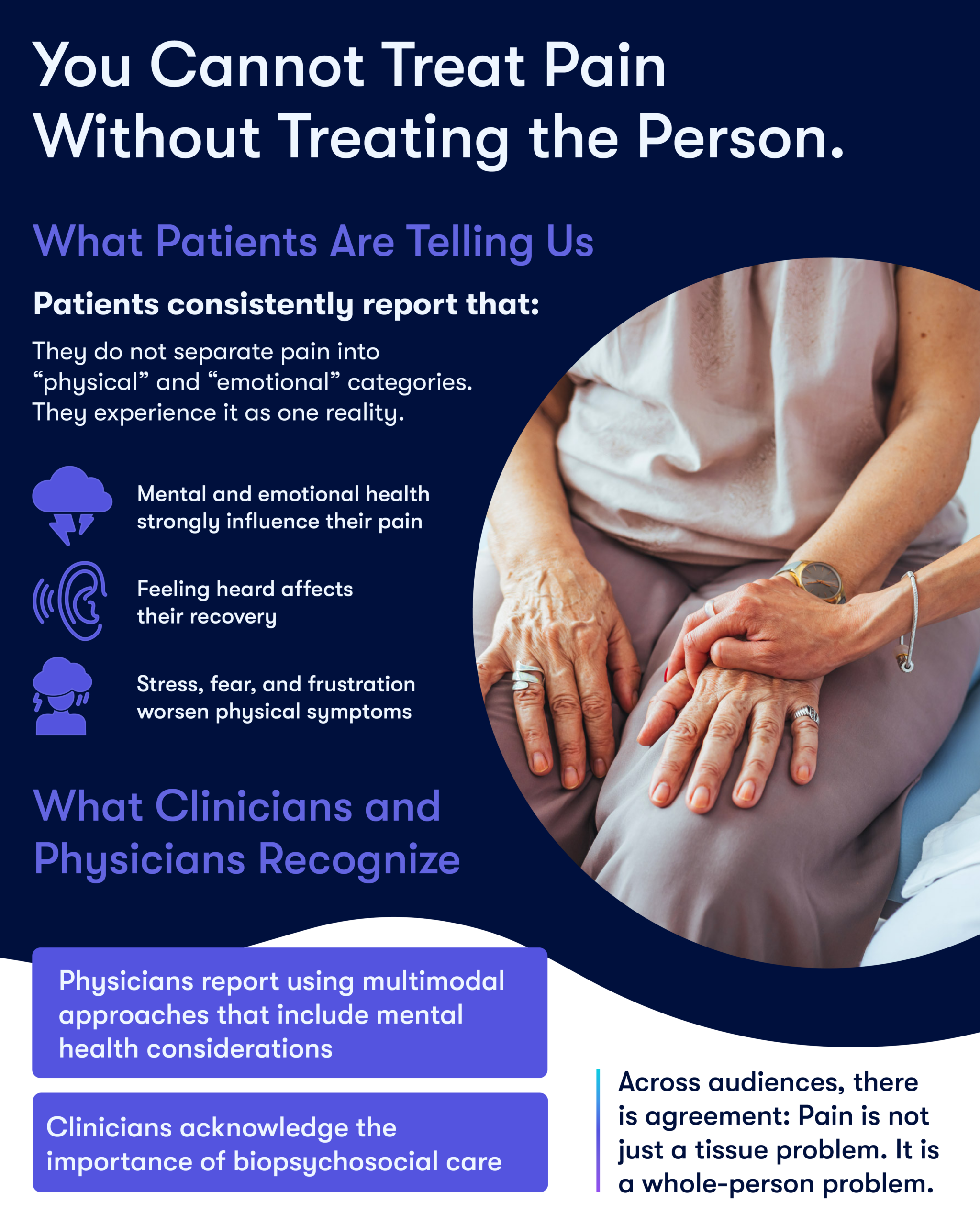
Understanding the Whole Person; What Leads to Chronic Pain?
Every person experiences pain differently. Two individuals with similar injuries may report dramatically different levels of pain, function, and recovery. Why? The answer often lies beyond the physical condition itself.
Factors such as stress, sleep quality, anxiety, depression, social support, previous healthcare experiences, work demands, and movement confidence can all influence how pain is experienced and how recovery progresses.
This doesn’t mean pain is “all in someone’s head.”
It means pain is shaped by a complex interaction of factors throughout the body and nervous system.
The Biopsychosocial Model in Action
Modern pain science often refers to the biopsychosocial model. The model recognizes that recovery is influenced by:
Biological Factors
- Injury history
- Physical health
- Medical conditions
- Movement capacity
Psychological Factors
- Fear of movement
- Stress
- Anxiety
- Depression
- Confidence
Social Factors
- Family support
- Work environment
- Financial stressors
- Community engagement
When clinicians address these factors together, they gain a more complete understanding of the patient’s experience and opportunities for recovery.
What Whole-Person Care Looks Like
Whole-person care is not about replacing physical treatment. It is about expanding it. Effective chronic pain care may include:
- Movement and exercise
- Pain education
- Functional goal setting
- Behavioral strategies
- Confidence-building activities
- Self-management support
The objective is not simply to reduce pain but to improve a person’s ability to participate in life.
For many patients, success looks like returning to work, exercising again, traveling, playing with grandchildren, or sleeping comfortably through the night.
Recovery Is Bigger Than a Pain Score
One of the challenges in healthcare is that outcomes are often measured through symptoms alone. Patients, however, frequently define recovery through function.
Can I walk farther? Can I sit through a meeting? Can I enjoy time with my family? Can I return to the activities I love? These questions often matter more than a number on a pain scale.
A Better Future for Pain Care
The findings from The Pain Perspective reinforce what many clinicians see every day: chronic pain affects every aspect of a person’s life.
As healthcare continues to evolve, the most effective solutions will be those that recognize the full complexity of pain and treat the whole person—not just the diagnosis.
Because recovery is about more than feeling better. It’s about living better.
