
When you are in pain, the word “conservative” may sound like “wait and see.” In healthcare, conservative care means something different. It describes care that starts with lower-risk, non-surgical options when they are appropriate for the condition and the person.
Conservative care can be active and goal-focused. It may include physical therapy, movement, education, activity changes, sleep or stress support, and coordination with other healthcare professionals. The plan depends on your symptoms, health history, goals, and clinical needs.
The Pain Perspective, Confluent Health’s 2026 survey of more than 1,300 patients, clinicians, and referring physicians, found broad support for care that does not rely on medication. About two-thirds of patient respondents rated this type of care important or very important. Patient comments also showed strong interest in trying appropriate options before long-term medication or more invasive treatment.
Options that support movement, function, understanding, and long-term quality of life before more invasive care when appropriate.
Source: The Pain Perspective, patient respondent
Conservative Does Not Mean Passive
A conservative plan is not necessarily a plan to do less. Physical therapy often asks you to take an active role by learning about your symptoms, practicing movement, building strength or mobility, and gradually returning to meaningful activities.
You should not have to push through every symptom or ignore pain. The goal is to find an appropriate starting point, adjust when needed, and gradually build strength and tolerance.
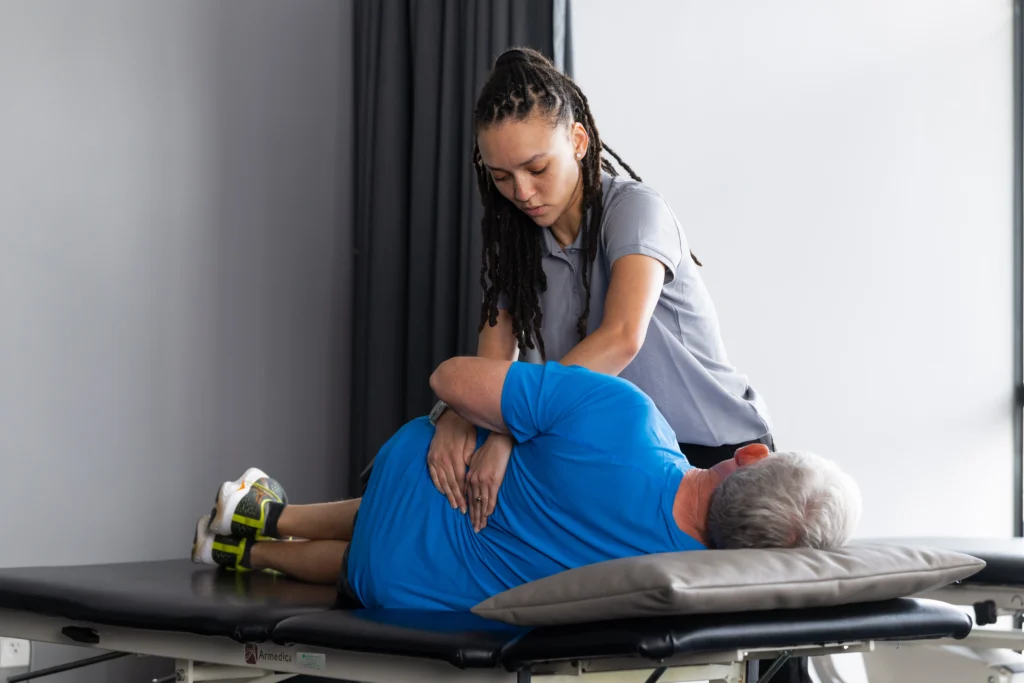
How a Physical Therapist Can Help With Conservative Care
For many muscle, joint, or movement-related concerns, a physical therapist is the right first point of contact. A PT can evaluate how symptoms affect your daily function, develop a plan based on your goals, and identify when additional medical evaluation may be needed.
Your physical therapist may:
- Ask about your symptoms, health history, goals, and daily demands
- Assess movement, strength, mobility, balance, or activity tolerance
- Explain findings in clear language
- Develop an individualized movement and exercise plan
- Help you modify activities without giving them up unnecessarily
- Track function and confidence as well as pain
- Recognize signs that may require additional medical evaluation and connect you with the appropriate provider
Conservative Care Can Be Part of a Larger Plan
Chronic pain is complex, and no single type of care is right for everyone. Conservative care may be one part of a larger plan that includes primary care, mental health support, medication management, or another specialty.
Choosing physical therapy first when appropriate does not close the door to other care. It can create an earlier opportunity to evaluate movement and function, begin education, and build a practical plan while keeping clear pathways to additional medical care when needed.
Questions to Ask About Your Options
- What are the benefits and limits of this option?
- What would we expect it to help me do?
- How long should I try it before we reassess?
- What can I do between visits?
- What signs would suggest I need another evaluation?
- How does this option fit with my other health needs and treatments?
You and your physical therapist should make decisions together. Your preferences, goals, and concerns should be part of the plan. Ask your PT to explain unfamiliar terms and discuss other reasonable options.
How Your Physical Therapist Helps Guide the Next Step

Physical therapists are trained to screen for signs that symptoms may require additional medical evaluation. If your PT identifies a concern or believes another type of care should be part of your plan, they can connect you with the appropriate healthcare provider.
For many people with chronic muscle, joint, or movement-related pain, physical therapy is the right place to begin, with movement, education, and goals connected to real life.
Explore The Pain Perspective to see what patients, clinicians, and referring physicians said about conservative care and the pathways needed to support it.
