
As the year winds down, it’s natural to reflect on the past twelve months and look ahead to the new year. Amid the holiday planning and end-of-year wrap-ups, there is one important task that often gets overlooked: reviewing your health insurance benefits.
Understanding Your Year-End Health Insurance Benefits
Health insurance plans can be complex, and coverage varies significantly from person to person. However, understanding a few basic mechanisms can help you make informed decisions before December 31st.
First, consider your deductible. This is the amount you pay out-of-pocket for health care services before your insurance plan begins to share the cost. If you have had medical visits, treatments, or procedures earlier in the year, you may be close to your deductible. If you have met it, your out-of-pocket costs for physical therapy, could be significantly reduced for the remainder of the year.
Second, if your employer offers a Flexible Spending Account (FSA), you likely have pre-tax dollars set aside specifically for healthcare expenses. For many FSA plans, these funds do not roll over into the new year. It is a true “use it or lose it” scenario.
Because every insurance policy is different, we highly encourage you to review your specific plan, log into your portal, or call your provider to understand your exact coverage and see where your numbers stand today.
Finding Your Starting Point
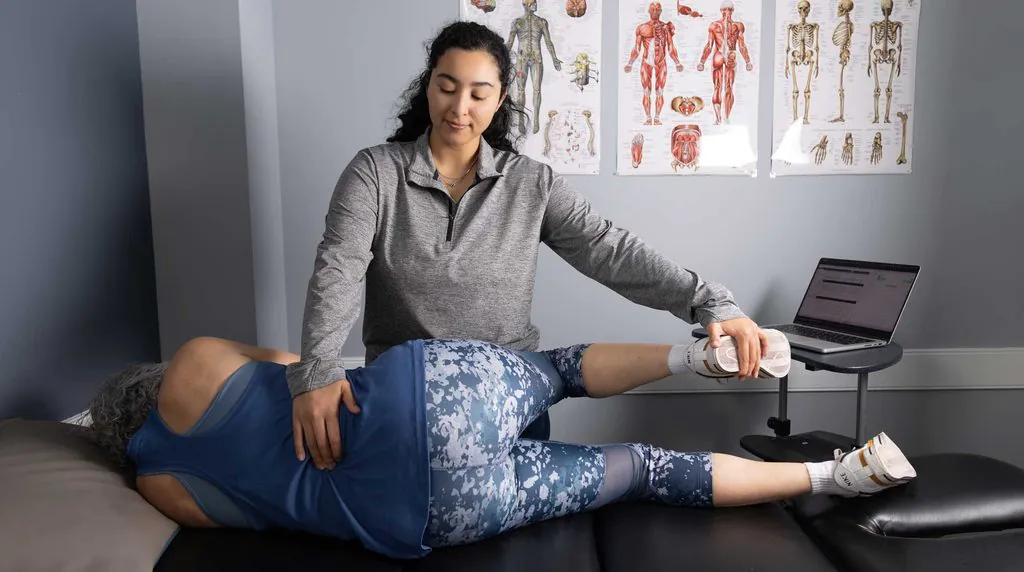
You do not need to be recovering from an injury or major surgery to benefit from physical therapy. In fact, one of the best ways to use your remaining health benefits is to simply understand your body’s current starting point.
Have you been putting off addressing a nagging ache in your shoulder? Does your lower back feel stiff after long days at your desk? Physical therapy offers the perfect environment for a movement assessment. Rather than ignoring these discomforts or worrying about what they might mean, a physical therapist can help you take an appropriate next step. We can evaluate your mobility, identify areas of tightness or weakness, and build a tailored plan to help you move more comfortably in your daily life.
Setting Up for a Strong New Year

This proactive approach is especially valuable as you look toward January. The new year is a time when many of us are inspired to set fresh fitness goals or become more active. However, jumping into a new workout routine without understanding your body’s mechanics can sometimes lead to setbacks.
By utilizing your benefits now, you can address concerns and build a solid, healthy foundation. It is an excellent strategy for avoiding injuries when trying to exercise more in the new year. Instead of playing catch-up or dealing with a sudden strain in January, you give your body the preparation it needs to safely handle new activities.
Schedule a Physical Therapy Evaluation Before Year-End
Your health benefits are part of your overall wellness toolkit. Take a few minutes this week to review your plan. Consider the pain, injury, or movement concerns you may have been putting off, and reach out to schedule an evaluation. Let’s work together to ensure you enter the new year feeling strong, capable, and physically ahead of the curve. schedule to make it easy.
