
A new year often brings new fitness goals and thus new fitness routines. Maybe you want to run your first marathon, lift heavier weights, lose weight, or simply become more active. Whatever your goal, there’s nothing wrong with setting the bar high.
The mistake is expecting your body to immediately perform at the level you’re working toward.
For example, if your goal is to run a marathon but you haven’t run consistently in years, jumping straight into long-distance training probably isn’t your best approach. Instead, you might start with a Couch to 5K program, progress toward a half-marathon, and eventually work your way up to a full marathon.
The same principle applies to strength training and nearly every other physical activity. Your goals can be ambitious, but your starting point should reflect what you’re currently capable of doing.
Establish Your Fitness Baseline

One of the best things you can do when starting or returning to exercise is establish a baseline. This gives you a reference point for measuring progress and helps you determine how much exercise your body can currently tolerate. Your first few workouts can provide plenty of useful information.
For example:
- Running: Try running or walking one mile at a comfortable pace. Record your time, perceived effort, and whether you needed any walking breaks.
- Strength training: Spend your first week getting familiar with exercises like squats, presses, rows, and deadlifts. Identify maxes and repetition ranges you can perform comfortably with good control.
- General fitness: Record how long you can sustain an activity, how quickly you fatigue, and how you feel afterward.
These initial workouts serve another purpose. They can reveal potential limitations that might affect your training.
Maybe you experience shin pain when running, struggle to comfortably reach your desired squat depth, or notice that an old shoulder injury makes certain exercises uncomfortable.
This provides useful information about where you may need to modify your training, improve your physical capacity, or seek additional guidance.
Build a Plan and Progress Gradually
Once you’ve established your baseline, the next step is creating a routine that challenges you without overwhelming your current capacity. The goal is to consistently provide enough stimulus for your body to adapt while allowing adequate recovery.
Here are some practical starting recommendations based on your preferred activity.
For Strength Training

You don’t need a complicated five-day workout split to start building strength. A basic full-body routine performed two or three days per week can be an excellent starting point.
- Choose one or two exercises for each major muscle group, including movements that train your legs, pushing muscles, and pulling muscles.
- Beginners can start with approximately 3–6 challenging sets per muscle group per week, gradually building toward 6–12 sets as needed and tolerated.
- Select weights that allow you to finish most sets with approximately 2–3 repetitions left in reserve.
- As exercises become easier, gradually increase the weight, repetitions, or number of sets each week.
For example, a beginner might perform squats, farmer’s carries, chest presses, and rows twice per week. That’s a relatively simple routine that addresses most major muscle groups without requiring hours in the gym.
For Running

If you’re new to running or returning after a long break, you don’t need to begin with continuous running.
- Start with manageable run/walk intervals. For example, alternate one minute of running with two minutes of walking for 15-20 minutes.
- As your endurance improves, gradually increase the running portions and reduce the walking breaks.
- Once you’ve established a consistent running routine, consider increasing your run distance by around 10% or less as an initial guideline.
The 10% rule isn’t a scientifically established threshold that guarantees injury prevention, and some runners can tolerate larger increases while others may need smaller ones.
Also, pay attention to your total weekly workload, not just individual runs. If you’re running three miles on three separate days, increasing each run by 10% increases your total weekly mileage by 10%, not 30%. However, adding an entirely new run or increasing both distance and frequency can produce a much larger workload increase.
For Other Activities
Whether you’re starting cycling, hiking, recreational sports, or another activity, the same principle applies: gradually expose your body to increasing demands.
For example, someone preparing for a challenging mountain hike might begin with shorter walks, progress to longer distances, introduce hills, and eventually practice carrying a loaded backpack.
You can progress exercise through several variables, including frequency, duration, intensity, and total volume. You don’t need to increase all of them simultaneously.
How Physical Therapy Can Help You Reach Your New Fitness Routine
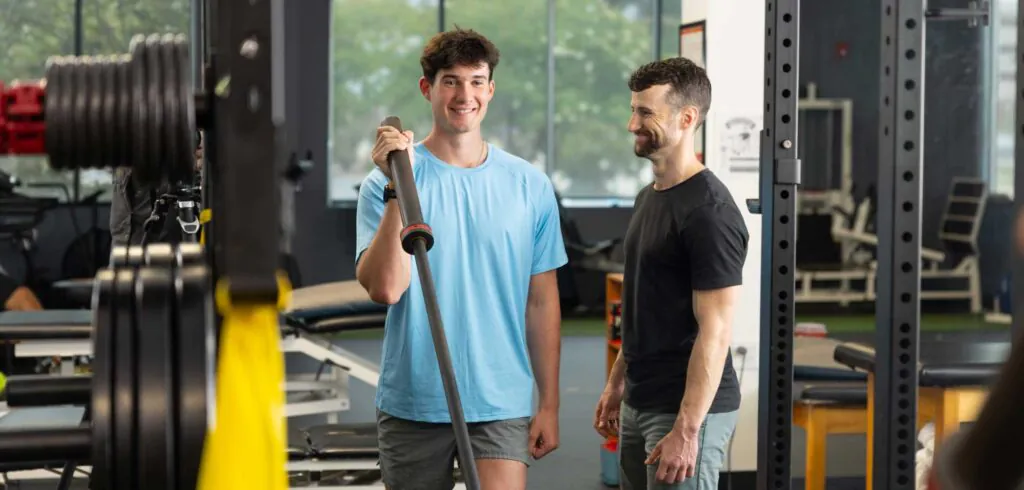
While many people can safely begin an exercise routine independently, a physical therapist can provide additional guidance, particularly if pain, previous injuries, or physical limitations are interfering with your goals.
Physical therapists can evaluate factors such as strength, mobility, balance, and movement tolerance to help identify barriers to exercise participation.
For example, if you consistently experience shin pain when increasing your running mileage, a physical therapist can assess your training history, strength, and other potential contributing factors. Similarly, if discomfort or limited mobility makes certain strength exercises difficult, a PT can recommend modifications and targeted exercises to help you participate more comfortably.
Physical therapists can also help you establish appropriate starting workloads and develop individualized progression plans based on your current abilities and long-term goals.
If pain, previous injuries, or physical limitations are holding you back, schedule an assessment with a physical therapist to identify potential barriers and develop a plan that supports your fitness goals.
