
Most people entering retirement spend years thinking about their financial future. They meet with financial advisors, contribute to retirement accounts, and carefully plan how to live comfortably later in life.
But far fewer people ask an equally important question: Will my body allow me to enjoy retirement the way I hope to?
Traveling, hiking, carrying luggage through airports, playing with grandkids, gardening, staying in your own home, and simply getting up from the floor all require physical capacity. Independence is not just a financial issue, it’s a physical one too.
This is where physical therapy can play an important role. Many people think of a Physical Therapist only after an injury occurs, but PTs can also serve as a type of “physical advisor” by helping people assess and improve the qualities most tied to long-term independence.

Longevity and Independence Are Closely Connected
Research consistently shows that physical fitness plays a major role in both longevity and independence. In previous longevity articles, we discussed how cardiorespiratory fitness (VO2 max), leg strength, and grip strength are all strongly associated with health outcomes and mortality risk.
Lower levels of strength and fitness have been linked to:
- Higher mortality rates
- Increased hospitalization risk
- Greater fall risk
- Frailty
- Loss of independence
- Increased likelihood of requiring assisted living or long-term care
The signs of declining independence are often subtle: slower walking speed, difficulty getting out of a chair, fear of getting on the floor. These may not seem significant at first, but these changes can be important indicators of declining physical reserve.
One example is walking speed. Research has shown that slower walking speed is strongly associated with reduced independence, higher hospitalization risk, and even higher mortality rates in older adults. Walking speed has become such a useful measure that some clinicians refer to it as a “vital sign” for aging adults.
Another major concern is the inability to get up from the floor independently. Many older adults quietly avoid getting on the ground altogether because they are afraid they may not be able to get back up. This fear often contributes to reduced activity levels, loss of confidence, and further physical decline over time.
These examples highlight an important distinction that is often missing from conversations about aging and longevity. Many discussions focus primarily on lifespan, or how long someone lives. But healthspan matters too. Living longer means much less if those additional years are spent limited by weakness, pain, poor mobility, or loss of independence.
Let Grandma Do It

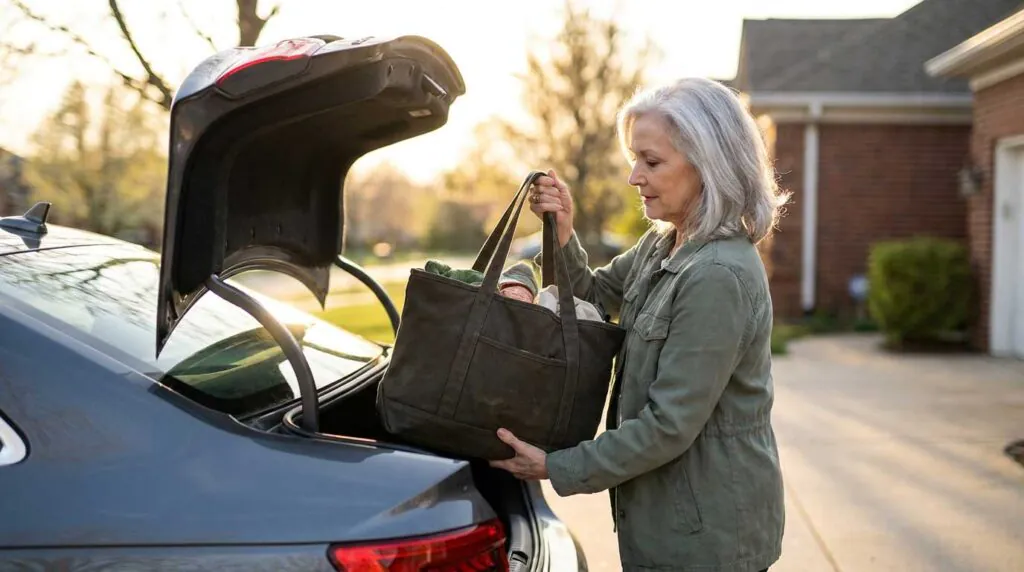
I have a patient story that has always stuck with me when it comes to independence and aging. A few years ago, I was treating a woman who was talking to me about her grandmother. She explained that everyone in the family was always very mindful about helping grandma out. Carrying groceries into the house, lifting cases of water, pushing the baby stroller, or handling anything physically demanding. The family mindset was essentially, “Don’t let grandma do it.”
Over time, my patient noticed her grandmother slowly declined in strength, mobility, and eventually independence. Grandma rarely had to do anything physically challenging anymore.
Fast-forward to the present, where my patient’s own mother is now becoming the family’s aging grandma. Rather than watching the same thing happen again, my patient encourages her family to let grandma continue doing hard things whenever possible. Not from a place of neglect or lack of compassion, but from a desire to preserve her independence and autonomy for as long as possible.
Grandma now carries groceries, helps around the house, stays active, and continues challenging herself physically each week. She remains independent and capable.
The message in this story can be summed up by a quote from Polish weightlifter and author Jerzy Gregorek, “Hard choices, easy life. Easy choices, hard life.” Independence isn’t found in being taken care of, it’s found in the strength to take care of yourself.
Staying Active vs Staying Capable
My patient’s grandmother is not the only story that sticks with me when it comes to independence. Many older adults I see in physical therapy come in with back pain, shoulder pain, weakness, mobility restrictions, balance deficits, or difficulty performing daily activities. One question I ask every new patient is what they are currently doing for exercise.
The answer is commonly “nothing” or “walking.”
To be clear, walking is excellent. Walking is associated with improved health outcomes, better mobility, cardiovascular benefits, and even increased longevity. Any movement is almost always better than no movement at all.
However, walking alone does not fully prepare the body for the physical demands of long-term independence.
Independence requires more than simply staying active. It requires maintaining physical capacity. The ability to recover from a stumble, climb stairs comfortably, carry heavy groceries, get off the floor, walk long distances with load while traveling, and tolerate the physical demands of everyday life often depends on several key physical qualities. These are the physical pillars of independence:
- Strength
- Cardiorespiratory fitness
- Balance and mobility
The Physical Pillars of Independence
Strength
Strength is one of the most important qualities tied to long-term independence. Lower body strength in particular plays a major role in stair climbing, getting out of chairs, carrying groceries, lifting objects, and recovering from trips or stumbles.
As we age, strength naturally declines if it is not challenged consistently. The good news is that strength remains highly trainable later in life.
General recommendations often include:
- Full-body resistance training 2-3 times per week
- Exercises that challenge the legs, hips, and upper body
- Progressive resistance over time
Cardiorespiratory Fitness
Cardiorespiratory fitness refers to how well the heart, lungs, and muscles work together during activity. This quality plays a major role in endurance, fatigue resistance, walking tolerance, and the ability to remain active during travel or daily life.
Current recommendations guidelines are:
- About 150 minutes of moderate aerobic activity per week
- Or 75 minutes of more vigorous exercise
Walking is a fantastic starting point, but many people benefit from challenging the cardiovascular system with activities such as:
- Weighted vest / backpack walking
- Cycling
- Swimming
- Jogging
- High intensity interval training
Improving cardiorespiratory fitness is strongly associated with better long-term health outcomes and reduced mortality risk.
Balance and Mobility
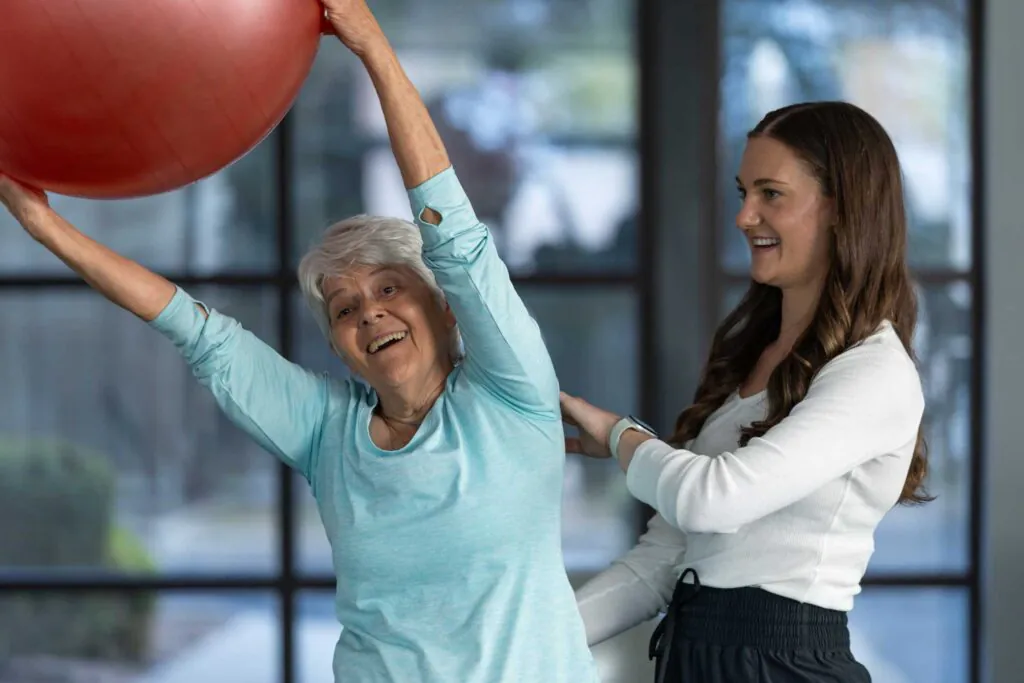
Balance and mobility are critical for maintaining confidence and reducing fall risk as we age. Balance is not simply about standing on one foot. It is the ability to confidently control your body in changing environments.
Mobility and balance training may include:
- Full range-of-motion exercises
- Single-leg movements
- Balance drills
- Practicing skills such as getting on and off the floor safely
Many adults assume balance loss is just a normal part of aging that cannot be improved. In reality, balance remains trainable throughout life.
Invest in Your Future Self
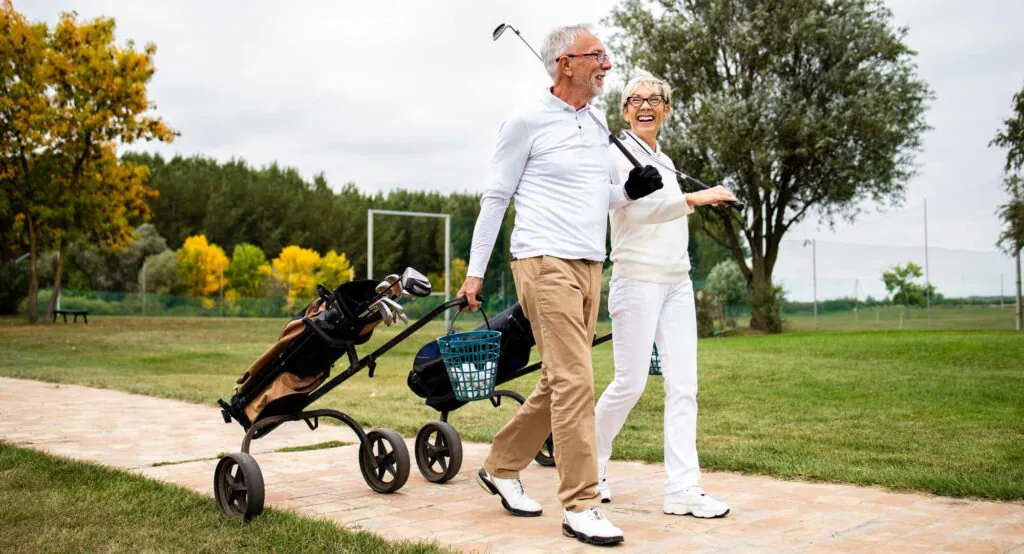
You cannot completely control aging, but you can strongly influence how you age. The earlier you begin investing in your strength, mobility, balance, and cardiovascular health, the more independence you may preserve later in life.
Most people would never enter retirement without some type of financial plan. Your physical future deserves the same level of attention.
A proactive visit with a Physical Therapist can help identify limitations, address weaknesses, and build a plan designed to keep you active, capable, and independent for years to come.
Do not just prepare financially for retirement, physically prepare for it too by making an appointment with a physical therapist below.
