In a traditional physical therapy clinic, we wait for a tissue to fully heal, remodel, and become pain-free before clearing someone. NFL players have access to state-of-the-art rehab, experimental treatments, and it is their literal job to get better. Additionally, if an injury doesn’t cause immediate structural failure, the timeline becomes a high-stakes business calculation.
When a player, medical staff, and coach look at an injury, they are measuring risk vs. reward. If a team is fighting for a playoff spot, they will aggressively use rigid bracing, heavy taping, custom padding, targeted pain management, and other strategies to push an athlete onto the field weeks ahead of schedule. This is often the best short-term decision, but not necessarily best for the long term.
For fantasy football purposes, you must remember that “Active” does not mean fully recovered.
Below are some of the most common and fantasy-relevant injuries seen in NFL players. Timelines vary based on injury severity, imaging, symptoms, position, surgery vs non-surgery, bracing, and whether the player is returning to full performance or simply returning to availability.
1. Lateral ankle sprain
- Typical recovery timeline: Mild cases may settle in several days to 2 weeks, while more severe or unstable sprains can take 3–6+ weeks.
- Possible NFL return window: Days to 2 weeks. Mild ankle sprains can be managed quickly with taping, bracing, and symptom control, especially if the athlete has enough stability to cut, plant, and tolerate contact.
- Affects: Cutting, jumping, landing, acceleration, deceleration, balance, and change of direction.
- Position note: Most relevant for RBs, WRs, TEs, mobile QBs, and kickers because these roles rely on foot/ankle stability, sharp planting, and push-off. Lateral ankle sprains can sometimes be taped or braced in a way that limits excessive rolling of the ankle, which is why some players may return faster than expected. That said, a player can still lose explosiveness if pain, swelling, or confidence with cutting is not back to normal.
- How it’s treated: Usually treated with swelling control, taping or bracing, early range of motion, ankle strengthening, balance training, and gradual return to cutting, jumping, and contact.
2. Hamstring strain
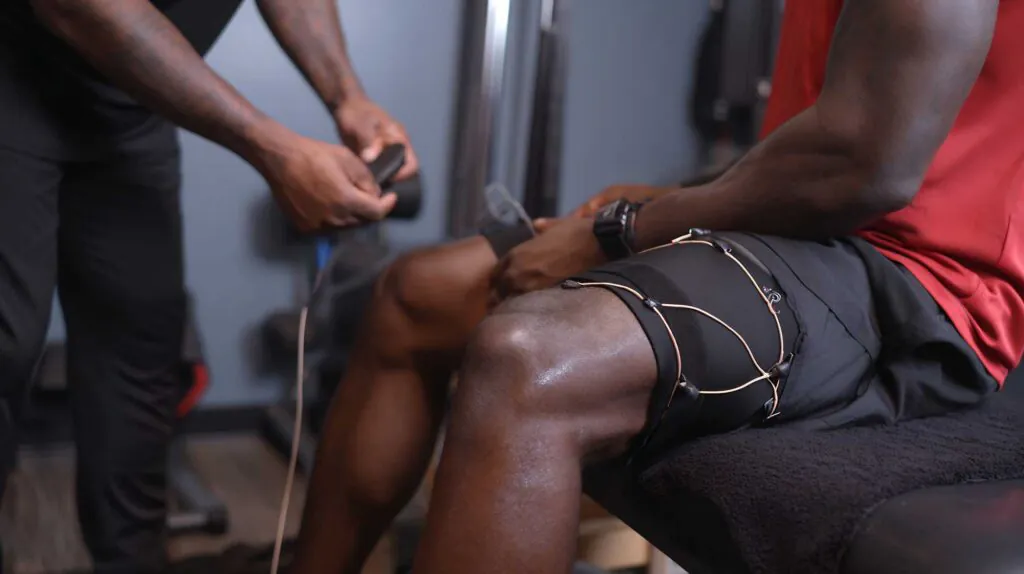
- Typical recovery timeline: Often 2–6+ weeks depending on grade, recurrence, and sprint demands.
- Possible NFL return window: Mild cases may return in 1–3 weeks, but recurrence risk is a major concern if the athlete returns before full-speed sprinting is restored.
- Affects: Sprinting, acceleration, top-end speed, route separation, burst, repeated high-speed efforts, and kicking mechanics.
- Position note: Usually more concerning for RBs, WRs, and TEs because their value often depends on acceleration, separation, route tempo, and yards after catch/contact. It can also matter for mobile QBs who rely on scrambling or designed runs. For kickers, a hamstring strain may affect leg swing, power, follow-through, or confidence on longer attempts.
- How it’s treated: Usually treated with load management, progressive hamstring strengthening, hip and trunk strengthening, gradual sprint exposure, and return-to-speed testing before full practice or game intensity.
3. Concussion
- Typical recovery timeline: Often 1–2+ weeks, but symptoms and clearance timelines vary widely.
- Possible NFL return window: A player must progress through the NFL return-to-participation protocol before full clearance. Some players may clear quickly, while others miss multiple weeks depending on symptoms, timing, medical history, and independent clearance.
- Affects: Cognition, reaction time, balance, vision, decision-making, exertion tolerance, and contact readiness.
- Position note: Relevant across all positions. For QBs, concussion symptoms may affect processing speed, timing, and decision-making. For RBs, WRs, and TEs, it may affect reaction time, confidence in traffic, and tolerance for contact. This is less about “playing through it” and more about whether the player fully clears the protocol.
- How it’s treated: Managed with removal from play, symptom monitoring, gradual return to cognitive and physical activity, and progression through the NFL return-to-participation protocol. Lingering symptoms may also require vestibular, vision, or cervical rehab.
4. MCL sprain
- Typical recovery timeline: Mild injuries may recover in 1–3 weeks, moderate injuries often take 4–8+ weeks, and more severe or combined injuries can take longer.
- Possible NFL return window: Some players return earlier with a rigid hinged knee brace if the knee is stable enough and symptoms are manageable. The brace can help limit valgus stress, but it does not automatically restore normal cutting, confidence, or explosiveness.
- Affects: Cutting, deceleration, lateral stability, contact tolerance, blocking, and confidence planting on the injured leg.
- Position note: More concerning for RBs, WRs, TEs, and mobile QBs because they repeatedly plant, cut, and absorb contact. A braced MCL may allow a player to run more comfortably in a straight line, but lateral jump cuts, hard deceleration, and sudden contact can still be limited. Pocket QBs may be able to function sooner than mobile QBs, but lower-body stability still matters for throwing base and pocket movement.
- How it’s treated: Often treated with bracing, swelling control, restoring knee motion, quad/hip strengthening, balance work, and gradual return to cutting and contact once valgus stress is tolerated.

5. AC joint sprain / shoulder separation
- Typical recovery timeline: Often 1–6+ weeks depending on grade, pain, and contact demands.
- Possible NFL return window: Mild cases may return in 1–3 weeks with padding or pain management, while higher-grade injuries or throwing-side injuries may take longer.
- Affects: Blocking, tackling, bracing for contact, reaching, catching through contact, overhead motion, and ball security.
- Position note: Most concerning for QBs if it involves the throwing shoulder because it can affect arm motion, velocity, accuracy, and willingness to absorb contact. For WRs it may affect the ability to reach where RBs and TEs have more concern for contact tolerance, blocking, and protecting the ball. A player may look fine in open space but still struggle when landing, getting tackled, or extending through contact.
- How it’s treated: Usually treated with pain control, short-term protection or padding, shoulder range of motion, scapular and rotator cuff strengthening, and gradual return to blocking, catching, throwing, or contact.
6. High ankle sprain / syndesmotic sprain
- Typical recovery timeline: Often 4–8+ weeks, with more significant cases taking longer.
- Possible NFL return window: Some players may return in 2–4+ weeks, but early return often comes with reduced push-off, slower change of direction, and limited rotational tolerance.
- Affects: Push-off, cutting, pivoting, blocking, acceleration, and change of direction.
- Position note: Usually more concerning than a low ankle sprain for RBs, WRs, TEs, and mobile QBs because the syndesmosis is stressed when the foot is planted and the leg rotates. Unlike many low ankle sprains, this injury cannot be fully “taped away” because the problem involves stability between the tibia and fibula. Even when active, the player may lack normal burst, sharp cuts, or confidence driving off the injured leg. It can also affect kickers if it involves the plant leg or kicking leg.
- How it’s treated: Treated with protection from painful rotation and push-off, possible boot or bracing, gradual weight bearing, ankle/calf strengthening, balance work, and slow progression back to cutting and sprinting.
7. Meniscus tear
- Typical recovery timeline: Smaller or non-surgical cases may take several weeks, while surgical cases vary widely depending on whether the meniscus is trimmed or repaired.
- Possible NFL return window: Some players return 1–3 weeks after less complex cases or ignoring the injury, while repairs, recurrent swelling, or mechanical symptoms can take much longer.
- Affects: Cutting, squatting, deceleration, swelling tolerance, lateral movement, and repeated loading.
- Position note: More concerning for RBs, WRs, TEs, and mobile QBs because cutting and change of direction are central to performance. The key fantasy issue is not just pain, but swelling and workload tolerance. A player may be cleared to play but still struggle with repeated cuts, heavy snap volume, or short-week recovery. Linemen are also heavily affected, but that usually matters to fantasy managers indirectly through offensive line play, QB protection, or D/ST context.
- How it’s treated: Treatment depends on severity and surgery status. Rehab usually focuses on swelling control, restoring knee motion, quad strength, hip control, progressive loading, and return to cutting, squatting, and repeated deceleration.
8. ACL tear
- Typical recovery timeline: Usually 6–12+ months after reconstruction, with performance recovery often taking longer than medical clearance.
- Possible NFL return window: Same-season return is not realistic for most ACL tears. Even after returning the next season, players may need additional time to regain confidence, workload tolerance, explosiveness, and cutting sharpness.
- Affects: Cutting, deceleration, pivoting, jumping, landing, contact tolerance, and confidence in the knee.
- Position note: Major concern for all fantasy-relevant positions, especially RBs, WRs, TEs, and mobile QBs because production depends heavily on cutting, burst, and lower-body power. QBs may be less affected and some have played with torn ACLs, but mobile QBs can lose a major part of their fantasy value if rushing volume or scrambling confidence is reduced.
- How it’s treated: Usually requires surgical reconstruction for NFL-level return. Rehab is long-term and includes restoring motion, strength, jumping/landing mechanics, cutting, deceleration, sprinting, and sport-specific confidence.
9. Groin / adductor strain
- Typical recovery timeline: Often 2–6+ weeks depending on grade, recurrence, and lateral movement demands.
- Possible NFL return window: Mild cases may return in 1–3 weeks, but symptoms can linger if the athlete returns before cutting, sprinting, and lateral movement are fully tolerated.
- Affects: Lateral movement, cutting, acceleration, change of direction, stride length, hip control, and kicking mechanics.
- Position note: Usually more concerning for RBs, WRs, TEs, mobile QBs, and kickers because these roles rely on sprinting, cutting, directional change, or kicking power. Groin injuries can be especially frustrating because straight-line jogging may look fine, while hard lateral cuts, route breaks, and sudden acceleration still provoke symptoms.
- How it’s treated: Usually treated with load reduction, progressive adductor and hip strengthening, trunk/pelvic control, gradual lateral movement, sprinting, cutting, and kicking progression when relevant.

10. Hand / finger fracture or dislocation
- Typical recovery timeline: Often 2–6+ weeks depending on the bone, joint, stability, and whether surgery is needed.
- Possible NFL return window: Some players may return same day with taping, splinting, protective padding, or a custom cast/club, but position matters heavily.
- Affects: Catching, gripping, throwing, ball security, blocking, tackling, and hand fighting.
- Position note: This is where fantasy context matters a lot. A RB with a protected finger or hand injury may still be able to run, take handoffs, and carry the ball if grip and ball security are acceptable. A WR or TE may be more affected because catching, contested catches, and catch radius depend directly on hand function. For QBs, any injury to the throwing hand is a major concern because grip, release, accuracy, and ball control can all be affected. In standard fantasy, defensive hand injuries usually matter most through D/ST context unless the league uses IDP scoring.
- How it’s treated: Treatment may include splinting, taping, reduction, surgery if unstable, protective padding, grip work, and sport-specific progression for catching, throwing, blocking, or ball security.
11. Turf toe
- Typical recovery timeline: Often 2–6+ weeks depending on severity, with more serious cases sometimes lingering longer.
- Possible NFL return window: Mild cases may return in 1–3 weeks, but symptoms can linger because the big toe is involved in nearly every explosive football movement.
- Affects: Pushing off, sprinting, cutting, jumping, blocking, and change of direction.
- Position note: Usually more concerning for RBs, WRs, and TEs because explosive push-off is central to route running, cutting, and yards after contact. It can also matter for mobile QBs and kickers depending on which foot is involved. Turf toe can be more limiting than it sounds because the big toe is part of the power base for nearly every step. A player may be active but still lack normal burst, cutting sharpness, or drive through contact.
- How it’s treated: Usually treated with reducing painful push-off volume, taping the big toe, using a stiff foot plate or modified cleat to limit toe extension, restoring toe/foot strength, and gradually progressing sprinting, cutting, and jumping.
12. Calf strain
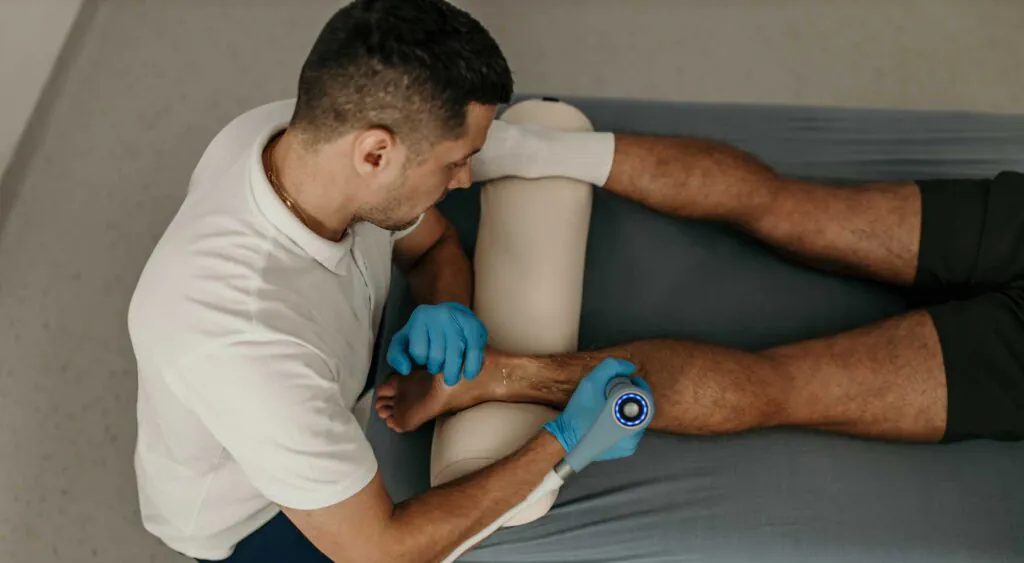
- Typical recovery timeline: Often 2–6+ weeks depending on grade, recurrence, and sprint demands.
- Possible NFL return window: Mild cases may return in 1–3 weeks, but recurrence, tightness, or reduced push-off can limit explosiveness.
- Affects: Push-off, acceleration, sprinting, jumping, deceleration, and change of direction.
- Position note: Relevant for RBs, WRs, TEs, mobile QBs, and kickers because calf function contributes to push-off and lower-body explosiveness. It may be especially noticeable for players who rely on burst, repeated sprinting, or kicking mechanics. Calf injuries can also be deceptive because a player may look close to normal at lower speeds but struggle when asked to accelerate, sprint repeatedly, or explode out of cuts.
- How it’s treated: Usually treated with load management, progressive calf strengthening, ankle mobility, balance work, gradual plyometrics, and return to sprinting, cutting, or kicking once push-off is pain-free and explosive.
Don’t let an unexpected injury derail your fantasy season. Standard injury reports don’t tell the whole story, but insights from physical therapists can. Download the 2026 Fantasy Football Injury Cheat Sheet now and confidently manage your roster to a title.