
Pain can limit your ability to move, work, and enjoy daily life–but effective, hands-on treatment options are available. This guide provides a comprehensive overview of manual physical therapy (PT) and its role in treatment and recovery. Through skilled, hands-on techniques, manual therapy can help reduce pain, improve mobility, restore function, and enhance overall quality of life.
Manual PT is often used alongside exercise and movement-based interventions to address a wide range of conditions, from joint stiffness and muscle tightness to post-injury or post-surgical limitations. By addressing the symptoms and movement limitations associated with pain and dysfunction, it offers a personalized, evidence-based approach to care that supports both short-term relief and long-term outcomes.
This resource is designed for individuals experiencing pain and seeking effective treatment options, patients looking to better understand how manual therapy fits into their care, and healthcare professionals interested in the benefits of referring to PT. By providing clear, practical information, this guide aims to empower readers to make informed decisions and seek the professional support needed to improve movement, reduce pain, and return to activities that matter most.
Manual therapy is a hands-on treatment approach used by physical therapists (PTs) to assess and address pain, mobility restrictions, and movement dysfunction. It includes a wide range of techniques such as soft tissue mobilization (STM), instrument-assisted soft tissue mobilization (IASTM), trigger point therapy, myofascial release, joint mobilizations, joint traction, movement with mobilization (i.e. Mulligan techniques), spinal mobilizations, high-velocity low-amplitude (HVLA) thrust manipulations, passive stretching techniques (including proprioceptive neuromuscular facilitation or PNF), and nerve gliding techniques. These interventions are designed to improve tissue mobility, reduce pain, and facilitate better movement patterns.1
There is strong evidence supporting the short-term benefits of manual therapy, particularly when combined with exercise. Studies have shown that manual therapy interventions can lead to statistically significant reductions in pain and improvements in range of motion (ROM) in patients with musculoskeletal conditions, especially spinal and joint-related pain.1.2 For example, systematic reviews have found that patients receiving manual therapy in combination with exercise report greater short-term pain relief compared to exercise alone, though long-term outcomes between the two approaches are often similar.2 Additionally, manual therapy has been shown to produce immediate improvements in joint mobility and perceived pain levels, which can enhance a patient’s ability to participate more effectively in active rehabilitation.1
Despite these benefits, manual therapy is not intended to “fix” a condition on its own or serve as a long-term standalone solution. Research consistently demonstrates that exercise-based rehabilitation plays the most critical role in long-term outcomes. While manual therapy may accelerate early symptom relief and improve tolerance to movement, exercise alone often produces equal or superior long-term results, and combining the two yields similar long-term outcomes to exercise by itself.2 For this reason, manual therapy is best used as an adjunct to a comprehensive, individualized treatment plan that emphasizes active participation and long-term self-management.
Manual PT can be beneficial for a wide range of musculoskeletal conditions, particularly those involving pain, stiffness, or restricted movement. It is commonly used to help manage conditions such as neck and back pain, joint stiffness, muscle tightness, post-injury limitations, and certain nerve-related symptoms. One of the primary roles of manual therapy is pain modulation–helping to reduce pain through neurophysiological mechanisms–while also improving joint and soft tissue mobility to support better movement patterns.1
Individuals who may benefit from manual therapy include those experiencing acute or chronic pain, reduced ROM, post-surgical stiffness, or difficulty performing daily or recreational activities due to movement limitations. It is often particularly helpful in the early stages of rehabilitation to help restore motion and reduce discomfort, allowing patients to better tolerate and engage in active exercise-based interventions.

There are several types of manual therapy techniques, each designed to target specific tissues and impairments. Soft tissue techniques, such as STM, IASTM, trigger point therapy, and myofascial release, focus on improving muscle and fascial mobility while reducing tension and discomfort.1 Joint-based techniques, including mobilizations, manipulations (HVLA thrusts), and joint traction, are used to improve joint motion, decrease stiffness, and restore normal joint mechanics.2
Other specialized techniques include movement with mobilization (such as Mulligan techniques), which combine therapist-applied forces with active patient movement to improve function and spinal mobilizations (i.e. posterior-to-anterior mobilizations) to address stiffness in the spine. Passive stretching techniques, including proprioceptive neuromuscular facilitation (PNF), are used to improve flexibility, while nerve gliding techniques can help address mobility restrictions within the nervous system.4 Manual traction can also be applied to reduce pressure on joints or neural structures and improve overall mobility.1
Each technique is selected based on the individual’s specific impairments, symptoms, and goals. A skilled physical therapist (PT) will determine the most appropriate combination of techniques and integrate them into a broader rehabilitation plan that emphasizes long-term recovery through movement and exercise.1
Manual PT is commonly used to address a variety of symptoms related to musculoskeletal pain and movement dysfunction. These symptoms may be acute (recent onset) or chronic (persisting over time) and can significantly impact daily function and quality of life. Common pain-related symptoms include low back pain, neck pain, tension-type headaches, and radiating pain such as sciatica. Manual therapy has been shown to help modulate pain through neurophysiological mechanisms, making it an effective tool for short-term symptom relief when combined with active rehabilitation. 1,2
Stiffness and reduced mobility are also key indicators that manual therapy may be beneficial. Patients often present with limited ROM in joints such as the shoulder, hip, or knee, along with decreased flexibility that affects movement efficiency and function. Joint mobilizations and soft tissue techniques can help improve mobility, allowing for better participation in exercise and daily activities.4
Muscle-related symptoms, including spasms, tightness, and localized tenderness, are another common reason individuals seek manual therapy. These impairments can contribute to altered movement patterns and ongoing discomfort. Hands-on techniques targeting soft tissue restrictions can help reduce muscle tension and improve overall movement quality, particularly in the early stages of rehabilitation.1
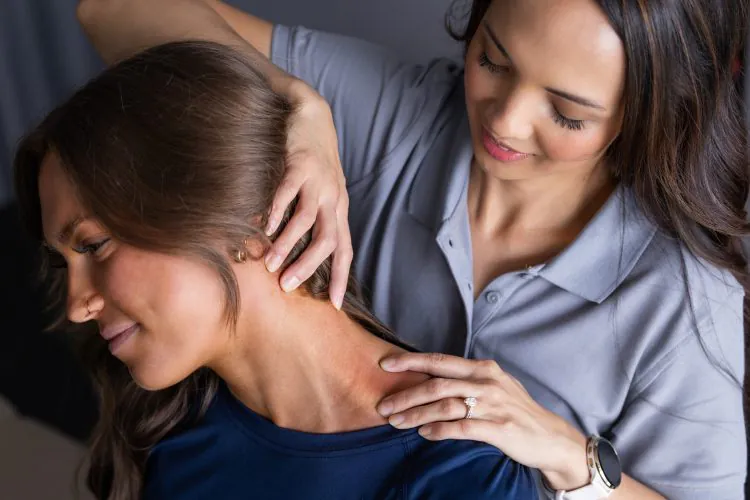
Knowing when to seek care is an important step in recovery. Individuals experiencing persistent pain, stiffness, or difficulty with movement that does not improve with rest or basic self-care may benefit from an evaluation by a PT. Patients can seek PT directly, though some might first consult with a physician depending on insurance requirements or the nature of their symptoms. Early evaluation can help identify the root cause of symptoms and prevent progression to more chronic issues.
In most cases, advanced diagnostic imaging, such as MRI or X-ray, is not required before beginning PT, especially for common musculoskeletal conditions. Clinical guidelines suggest that many cases of back, neck, and joint pain can be effectively managed based on a thorough physical examination alone, reserving imaging for more complex or non-improving cases.5
PTs evaluate whether manual therapy is appropriate through a comprehensive assessment that includes movement analysis, ROM testing, strength assessment, and palpation of joints and soft tissues. They also assess symptom behavior, functional limitations, and contributing factors such as posture or movement patterns. This hands-on evaluation helps determine whether techniques like joint mobilization, soft tissue work, or nerve gliding may be beneficial as part of the treatment plan.1
Manual therapy can provide meaningful improvements in pain, mobility, and overall function, particularly when used alongside an active rehabilitation program. Patients often experience short-term reductions in pain and increases in ROM following treatment, which can make it easier to perform exercises and return to daily activities. Research supports that combining manual therapy with exercise may enhance early outcomes, even though long-term results are largely driven by exercise-based interventions.2
Many patients report noticeable improvements in their ability to move and perform daily tasks after incorporating manual therapy into their care. For example, individuals with neck or back pain may experience decreased stiffness and improved tolerance to sitting, standing, or lifting. Those recovering from injury may find that reduced pain and improved mobility allow them to progress more confidently through their rehabilitation program. Patient experiences often highlight the value of hands-on care in reducing discomfort and building trust in movement during recovery.1
Manual therapy techniques are selected based on the individual’s needs and may include soft tissue work, joint mobilizations, manipulations, stretching techniques such as PNF, and nerve mobilization. These interventions are used strategically to address specific impairments, such as joint stiffness, muscle tightness, or neural tension.6
The primary goals of PT sessions that incorporate manual therapy include reducing pain, improving mobility, restoring normal movement patterns, and preparing the body for progressive strengthening and functional activity. While manual therapy can be highly effective for symptom relief, it is most beneficial when used to support active participation in exercise and long-term self-management strategies.2
Preventing future injuries requires a proactive approach that emphasizes long-term movement quality, strength, and consistency with exercise. While manual therapy can help reduce pain and improve mobility in the short term, sustained outcomes are best achieved through active strategies such as strengthening, flexibility training, and movement retraining. Research consistently shows that exercise-based programs are the most effective way to reduce recurrence of musculoskeletal pain and maintain functional improvements over time.2
One of the most important preventative strategies is maintaining adequate strength and stability throughout the body, particularly in key muscle groups that support joint mechanics. This includes not only strengthening primary movers but also improving control of stabilizing muscles that help guide proper movement patterns. Incorporating regular mobility work–especially for commonly restricted areas such as the hips, shoulders, and spine–can also help reduce stiffness and prevent compensatory movement patterns that may lead to injury.4
In addition to exercise, addressing posture, ergonomics, and daily movement habits plays a critical role in injury prevention. Small, repeated stresses–such as prolonged sitting, or repetitive motions–can contribute to the development of pain over time. Education and awareness of these factors, combined with gradual progression of activity levels, can help individuals better manage load and reduce the risk of reinjury.
Ongoing guidance from a PT can further support long-term health and well-being. Periodic check-ins or early intervention at the first sign of symptoms can help identify and address minor issues before they progress. By combining manual therapy when needed with consistent exercise, movement awareness, and appropriate activity progression, individuals can maintain improvements, enhance resilience, and support overall musculoskeletal health.1
At-home exercises typically include a combination of mobility, stretching, and strengthening movements tailored to your specific condition. These may involve ROM exercises, resistance training, and stabilization work to support proper movement patterns. Your PT will prescribe a personalized program to complement in-clinic manual therapy and promote long-term results.
A typical PT session lasts between 45 and 60 minutes, with the amount of time dedicated to manual therapy varying based on the patient’s condition, stage of recovery, and overall treatment plan. Sessions often include a combination of hands-on techniques, guided exercises, and education. The exact duration and structure may vary based on your condition, stage of recovery, and individual goals.