
Spinal stenosis can make everyday activities such as walking, standing, and even sleeping increasingly difficult due to pain, numbness, or weakness caused by narrowing of the spinal canal. While these symptoms can be frustrating, surgery is not the first or only solution. For many people, physical therapy (PT) is the recommended first-line treatment because it can effectively reduce pain, improve mobility, restore strength, and help you return to the activities you enjoy. Physical therapists (PTs) are movement experts who identify the underlying factors contributing to your symptoms, develop personalized treatment plans, and recognize when additional medical evaluation or surgical consultation may be appropriate if conservative care is unsuccessful.
Spinal stenosis is a condition in which the spaces within the spine become narrowed, placing pressure on the spinal cord or nearby nerve roots. It most commonly develops as part of the natural aging process and typically affects adults over the age of 50, although younger individuals can also develop spinal stenosis due to injury, congenital conditions, or other spinal disorders.1,2
The condition most frequently occurs in the lumbar spine (lower back) and the cervical spine (the neck).
Degenerative changes that contribute to spinal stenosis are extremely common with age. Imaging studies show that many adults over the age of 60 have some degree of spinal narrowing, although not everyone develops symptoms. Symptomatic lumbar spinal stenosis is estimated to affect approximately 11% of older adults and is one of the leading reasons adults over the age of 65 undergo spinal surgery.3
Symptoms can significantly impact daily life. Many individuals experience difficulty walking long distances, standing for extended periods, climbing stairs, exercising, or participating in hobbies they enjoy. Everyday activities such as grocery shopping or household chores may become increasingly difficult as symptoms progress.
Fortunately, surgery is not the first step for most people. Clinical practice guidelines recommend conservative treatment, such as PT, as the initial approach for many individuals with spinal stenosis. PTs are movement experts who can identify the cause of your symptoms, determine whether PT is appropriate, recognize signs that require medical referral, and develop an individualized treatment plan to reduce pain, improve mobility, and help you return to daily activities. Many patients experience meaningful improvements with PT and may delay or even avoid surgery altogether.1
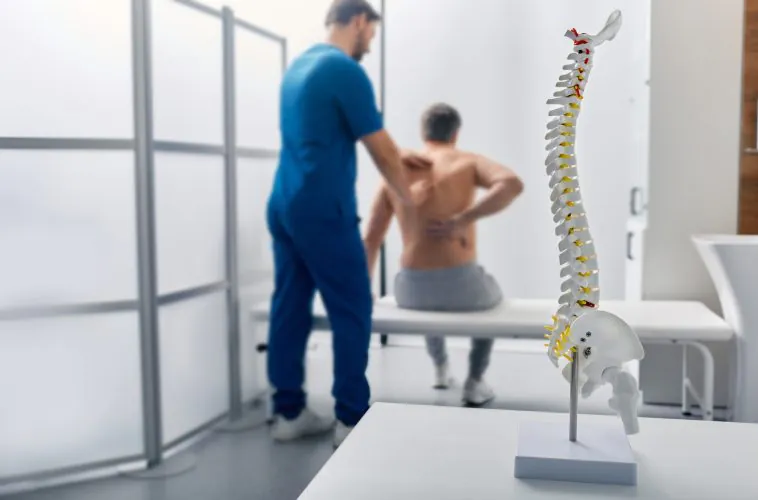
Spinal stenosis most often develops gradually as part of the body’s natural aging process. Over time, the structures of the spine undergo degenerative changes that can narrow the spinal canal or openings where spinal nerves exit the spine.
Common causes include:
Not all spinal stenosis is the same. Symptoms often depend on where the narrowing occurs.
Central canal stenosis occurs when the main spinal canal narrows, reducing the available space for the spinal cord (in the cervical spine) or the cauda equina nerve roots (in the lumbar spine).
Because multiple nerves may be affected simultaneously, central stenosis often produces symptoms on both sides of the body. In the lumbar spine, this commonly leads to neurogenic claudication, characterized by pain, heaviness, numbness, tingling, or weakness in both legs that worsens with standing or walking and improves with sitting or bending forward. Many patients notice they can walk farther when leaning on a shopping cart or using a walker because this slightly opened the spinal canal.4
In the cervical spine, significant central stenosis may compress the spinal cord, resulting in cervical myelopathy. Symptoms can include hand clumsiness, difficulty with fine motor tasks, balance problems, changes in walking, muscle weakness, increased reflexes, or bowel and bladder dysfunction in severe cases. Cervical myelopathy is considered a more serious condition and requires prompt medical evaluation.5
The spinal nerves exit the spine through small openings called the foramina Narrowing of these openings is known as foraminal stenosis, while narrowing just before the nerve exits is called lateral recess stenosis.
These forms of stenosis typically affect an individual nerve root rather than multiple nerves, resulting in radiculopathy–pain, numbness, tingling, or weakness that follows a specific nerve distribution. Symptoms are often unilateral, affecting only one arm or one leg depending on the level involved. For example, cervical foraminal stenosis may cause pain, numbness, or weakness radiating into the shoulder, arm or hand whereas lumbar foraminal stenosis commonly causes pain that travels into the buttock, thigh, calf, or foot.
Although symptoms may overlap with central stenosis, foraminal stenosis often produces more localized nerve pain and neurological symptoms corresponding to the compressed nerve root.1
Symptoms vary depending on the location and severity of the spinal narrowing, as well as which nerves are affected. Some individuals have mild symptoms that develop gradually over many years, while others experience more noticeable limitations in walking. Balance, or daily activities.
Central stenosis often affects multiple nerve roots or the spinal cord, resulting in symptoms that may occur on both sides of the body.
Lumbar central stenosis commonly causes:
Cervical central stenosis may cause:
When narrowing compresses a single nerve root, symptoms typically occur on one side of the body and follow the path of the affected nerve.
Common symptoms include:
While many symptoms improve with conservative treatment, certain findings, including rapidly progressing, weakness, bowel or bladder dysfunction or significant balance changes, require immediate medical attention.
A PT can perform a thorough examination to determine whether your symptoms are consistent with spinal stenosis, identify movement patterns contributing to pain, screen for signs that require referral to a physician, and develop a personalized treatment plan to improve mobility and function Early evaluation often allows treatment to begin before symptoms become more severe.

Because spinal stenosis is largely related to normal age-related changes, it cannot always be prevented. However, maintaining a healthy lifestyle can help slow functional decline, reduce symptom severity, and improve your ability to stay active.
Helpful habits include:
Rather than focusing on preventing the natural aging process, the goal is to maintain mobility, strength, and independence for as long as possible. Early evaluation by a PT can identify movement limitations, improve function, and help you continue participating in the activities that matter most.

Although spinal stenosis is often a chronic condition, it does not mean you have to stop doing the activities you enjoy. Many people successfully manage their symptoms and maintain an active lifestyle with the right combination of exercise education, and activity modification.
During symptom flare-ups, it can be helpful to change positions frequently, take short walking breaks instead of prolonged standing, avoid activities that significantly increase symptoms, and continue gentle movement rather than prolonged bed rest. Maintaining overall strength, flexibility, and cardiovascular fitness can also help improve function over time.
Because every person experiences spinal stenosis differently, treatment should be individualized to your symptoms, goals, and activity level. Working with a PT can help you safely progress your activity, manage flare-ups, and stay active for the long term. If your symptoms change or worsen, your PT can determine whether additional medical evaluation is appropriate.
PT is considered a first-line treatment for many individuals with spinal stenosis and is designed to reduce pain, improve mobility, restore strength, and help you return to activities that matter most.
Your PT will begin with a comprehensive evaluation of your symptoms, mobility, strength, balance, walking mechanics, and functional limitations before developing a personalized treatment plan. Treatment may include flexibility and mobility exercises, strength strengthening of the core and lower extremities, balance, and gait training, manual therapy, and education on posture, body mechanics, and symptom management. As your symptoms improve, exercises are progressively advanced to increase walking tolerance, function, and confidence.
At Confluent Health, our PT’s work closely with each patient to create an evidence-based rehabilitation program that aligns with their goals. Throughout treatment, we monitor your progress and adjust your program as needed to maximize recovery. Many individuals are able to reduce pain, improve their mobility, and return to everyday activities without surgery, although those who ultimately require surgery often achieve better postoperative outcomes when they have participated in PT beforehand.1
If you have spinal stenosis, avoid prolonged activity or bedrest, as this can lead to stiffness, muscle, weakness, and worsening symptoms. It’s also important to avoid repetitively, pushing through activities that significantly increase your pain, numbness, or weakness. A PT can help you modify activities and develop a safe exercise program that keeps you active while minimizing symptom flare-ups.
Many people find relief through conservative treatments, such as PT, targeted strengthening and mobility exercises, activity, modification, and over-the-counter anti-inflammatory medications when appropriate. A PT can develop a personalized treatment plan to improve mobility, reduce nerve irritation, increase walking tolerance, and help you return to your daily activities with less pain.